Customs Today
  • Home
  • Islamabad
  • Karachi
  • Lahore
  • National
  • Transfers and Postings
  • Chambers & Associations
  • Business
No Result
View All Result
Customs Today
  • Home
  • Islamabad
  • Karachi
  • Lahore
  • National
  • Transfers and Postings
  • Chambers & Associations
  • Business
No Result
View All Result
Customs Today
No Result
View All Result
Home Science & Technology Science

EPIC camera captures 3 developing tropical low pressure areas in Indian Ocean

byCustoms Today Report
29/10/2015
in Science, Science & Technology
Share on FacebookShare on Twitter

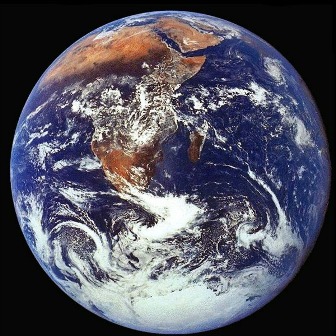
LONDON: NASA’s EPIC Camera has captured three developing tropical low pressure areas in the Indian Ocean in one image from a million miles away.

The Earth Polychromatic Imaging Camera or EPIC instrument that flies aboard NOAA’s DSCOVR or Deep Space Climate Observatory satellite captured an image showing all three low pressure areas on October 25 at 05:37 UTC (12:37 a.m. EDT).


You might also like

Tesla driverless system to use updated radar technology

12/09/2016

Apple to develop its own self-driving technology

10/09/2016

Two of the three systems have a medium chance to develop into a tropical depression in the next day or two, said NASA.

On October 25 and 26 two tropical low pressure areas are spinning in the Northern Indian Ocean, and one in the Southern Indian Ocean.

According to NASA, in the Northern Indian Ocean, System 93B was located east of the southern India peninsula. System 93B was near 6.6 degrees north latitude and 83.1 degrees east longitude. That’s about 190 nautical miles east of Colombo, Sri Lanka.

Despite this low pressure area having a weak low-level center of circulation with disorganized convection (rising air that forms the thunderstorms that make up a tropical cyclone), it is in an environment with low to moderate vertical wind shear. However, because it is close to Sri Lanka, its proximity to land is hindering development. System 93B has a low chance for development in the next two days.

System 94A was located on the western side of the southern India peninsula. System 94A was centered near 7.0 degrees north latitude and 66.0 degrees east longitude, about 1,080 nautical miles south-southeast of Muscat, Oman. System 94A has fragmented bands of thunderstorms wrapping into an elongated low-level center of circulation, but it’s in an environment with warm sea surface temperatures and low vertical wind shear that will allow it to develop.


Related Stories

Tesla driverless system to use updated radar technology

byCT Report
12/09/2016

WASHINGTON: Electric carmaker Tesla announced Sunday it was upgrading its Autopilot software to use more advanced radar technology. In a...

Apple to develop its own self-driving technology

byCT Report
10/09/2016

SAN FRANCISCO: Apple may not become an automaker, but it still wants to develop its own self-driving technology. The iPhone-maker's...

NASA spots slowest known magnetar

byCT Report
10/09/2016

WASHINGTON: Astronomers have found evidence of a magnetar - magnetised neutron star - that spins much slower than the slowest...

‘YouTubers’ outshining old-school television

byCT Report
09/08/2016

SAN FRANCISCO: A media revolution is taking place, and most people over 35 years of age aren’t tuned in. Millennial...

Next Post

Mysterious space debris will return to Earth, scientists

  • Terms and Conditions
  • Disclaimer

© 2011 Customs Today -World's first newspaper on customs. Customs Today.

No Result
View All Result
  • Transfers and Postings
  • Latest News
  • Karachi
  • Islamabad
  • Lahore
  • National
  • Chambers & Associations
  • Business
  • About Us

© 2011 Customs Today -World's first newspaper on customs. Customs Today.