

BEIJING: Oct 28 Rising investment in rail links between China and Europe could boost Chinese imports of fresh foods like meat and dairy products, predicts a new report from Dutch bank Rabobank.
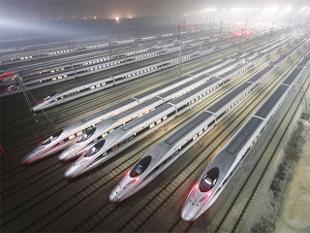
Railway lines built in recent years connecting southern Chinese cities to Europe significantly reduce transport times compared with ocean freight. But they are mainly used to ship industrial and IT products to Western markets, while many wagons return to China empty.
New facilities to handle agricultural products at Chinese rail terminals would allow for more imports of perishable goods, would raise open new trade routes, and raise Europe’s advantage in agricultural trade with China, the report said.
“It could potentially be a game changer,” said Jeroen Nijsen, Rabobank Asia chief executive, noting that 20 percent of China’s food imports come from Europe.
“Transportation time is about 40-50 days – if that could be brought down to 13 days or two weeks it could bring a whole new potential to Europe.”
China currently imports $6-7 billion of perishable food from Europe each year, mainly pork, dairy, fruit and seafood.
But Chinese demand for high quality, fresh food is growing rapidly. Fresh produce sales are booming at online retailers who are expected to see annual sales growth of more than 50 percent in coming years, said the bank.[reut.rs/1KCmF94 ]
Imported food accounts for 13 percent of online food sales, the highest value item, added the report.
More investment is needed in cold storage facilities to handle imports in new rail terminals however.
The YuXinOu railway, launched in 2011 and one of the earliest projects under China’s rejuvenation of old Silk Road trade routes, runs from Chongqing through Kazakhstan, Russia, Belarus, Poland and Germany, ending in Rotterdam in the Netherlands.
But with no fruit or meat-designated ports at the Chongqing rail terminal, agricultural products imported from Europe cannot be handled by customs there and cold storage facilities are also inadequate.
The “whole warehousing or cold chain infrastructure…really needs to be beefed up,” said Nijsen.
Non-perishable agricultural imports could also benefit from the new routes if transport costs reach parity with shipping, added the report, giving European exporters a significant advantage in transport times over major agricultural exporters such as the United States and Brazil.
“Railway costs are still higher than shipping costs, but there’s the potential to have that reverse in the next few years,” added Nijsen.
Use of more and larger trains would cut costs, allowing rail freight to take a share of the 10 million tonnes of perishable goods shipped to China by sea each year.

lamic banking assets reach Rs14.47 trillion, sector share rises to 23%
KARACHI: Pakistan’s Islamic banking sector expanded during 2025, increasing its share in the country’s financial system with assets reaching nearly...