Customs Today
  • Home
  • Islamabad
  • Karachi
  • Lahore
  • National
  • Transfers and Postings
  • Chambers & Associations
  • Business
No Result
View All Result
Customs Today
  • Home
  • Islamabad
  • Karachi
  • Lahore
  • National
  • Transfers and Postings
  • Chambers & Associations
  • Business
No Result
View All Result
Customs Today
No Result
View All Result
Home Science & Technology Science

Astronomers discovered new Milky Way component

byCustoms Today Report
30/10/2015
in Science, Science & Technology
Share on FacebookShare on Twitter

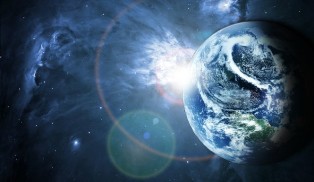
NEW YORK: A team of astronomers has discovered a previously unknown component of our home galaxy, the Milky Way — a thin disc of young stars in the central region of the galaxy buried behind thick clouds of dust.

The centre of the Milky Way galaxy, a region previously thought to consist of vast numbers of old stars, actually has young stars, the study showed.


You might also like

Tesla driverless system to use updated radar technology

12/09/2016

Apple to develop its own self-driving technology

10/09/2016

To make the discovery, the researchers used data from VISTA telescope at European Southern Observatory’s Paranal Observatory in Chile, taken between 2010 and 2014.

“The central bulge of the Milky Way is thought to consist of vast numbers of old stars. But the VISTA data has revealed something new — and very young by astronomical standards,” said lead author of the new study Istvan Dekany from Pontifical Catholic University of Chile.

The astronomers found 655 candidate variable stars of a type called Cepheids. These stars expand and contract periodically, taking anything from a few days to months to complete a cycle and changing significantly in brightness as they do so.

The researchers found that Cepheids are not all the same — they come in two main classes, one much younger than the other.

Out of their sample of 655, the team identified 35 stars as belonging to a sub-group called classical Cepheids — young bright stars, very different from the usual, much more elderly, residents of the central bulge of the Milky Way.


Related Stories

Tesla driverless system to use updated radar technology

byCT Report
12/09/2016

WASHINGTON: Electric carmaker Tesla announced Sunday it was upgrading its Autopilot software to use more advanced radar technology. In a...

Apple to develop its own self-driving technology

byCT Report
10/09/2016

SAN FRANCISCO: Apple may not become an automaker, but it still wants to develop its own self-driving technology. The iPhone-maker's...

NASA spots slowest known magnetar

byCT Report
10/09/2016

WASHINGTON: Astronomers have found evidence of a magnetar - magnetised neutron star - that spins much slower than the slowest...

‘YouTubers’ outshining old-school television

byCT Report
09/08/2016

SAN FRANCISCO: A media revolution is taking place, and most people over 35 years of age aren’t tuned in. Millennial...

Next Post

Universe is a mysterious place

  • Terms and Conditions
  • Disclaimer

© 2011 Customs Today -World's first newspaper on customs. Customs Today.

No Result
View All Result
  • Transfers and Postings
  • Latest News
  • Karachi
  • Islamabad
  • Lahore
  • National
  • Chambers & Associations
  • Business
  • About Us

© 2011 Customs Today -World's first newspaper on customs. Customs Today.