Customs Today
  • Home
  • Islamabad
  • Karachi
  • Lahore
  • National
  • Transfers and Postings
  • Chambers & Associations
  • Business
No Result
View All Result
Customs Today
  • Home
  • Islamabad
  • Karachi
  • Lahore
  • National
  • Transfers and Postings
  • Chambers & Associations
  • Business
No Result
View All Result
Customs Today
No Result
View All Result
Home Science & Technology Science

Storms of molten metal reign on starless planet 8th times bigger than Jupiter

byCustoms Today Report
03/11/2015
in Science, Science & Technology
Share on FacebookShare on Twitter

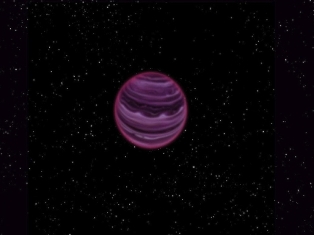
HARROW:A starless (or, as an Earth equivalent, “sunless”) planet might have the most gnarly weather conditions scientists have observed so far, which include riotous storms of molten metal.

“If you think about the Great Red Spot on Jupiter, it would be stormy spots like that,” said scientist Beth Biller, one of the leading scientists tracking and observing the stray, drifting planet. While that comparison works for its climate, the same might not be so true for the storm-studded sphere, whose total mass is eight times that of our solar system’s biggest planet.


You might also like

Tesla driverless system to use updated radar technology

12/09/2016

Apple to develop its own self-driving technology

10/09/2016

Located around 80 light-years from Earth, PSO J318.5-22 was discovered by science in 2013 with help from the Panoramic Survey Telescope & Rapid Response System (Pan-Starrs), a “wide-field imaging facility” at the University of Hawaii’s Institute for Astronomy; the group chocked up the planet’s lack of a centrifugal, starbound orbit to the planet being cannonballed from its parent star’s weaker pull.

The reason for the metal monsoons on PSO J318.5-22’s surface? Heat, pure and simple. The temperature maintained on the surface of the lost planet clocks in at about 1,100 kelvin (roughly 1,520.33 degrees Fahrenheit) — which is pretty impressive, considering that, without a star, it has no light or outside force to engender its burn factor. Instead, the entire planet is self-sufficient, producing the very same heat that creates its metallic drenchers from an internal source.

What this means is that, considering the conditions, any clouds found on the surface of the planet should be molten and contain liquid metals in contrast to the water found on Earth.

“These are likely hot silicates and iron droplet clouds,” added Biller. “This makes Venus look like a nice place.”


Related Stories

Tesla driverless system to use updated radar technology

byCT Report
12/09/2016

WASHINGTON: Electric carmaker Tesla announced Sunday it was upgrading its Autopilot software to use more advanced radar technology. In a...

Apple to develop its own self-driving technology

byCT Report
10/09/2016

SAN FRANCISCO: Apple may not become an automaker, but it still wants to develop its own self-driving technology. The iPhone-maker's...

NASA spots slowest known magnetar

byCT Report
10/09/2016

WASHINGTON: Astronomers have found evidence of a magnetar - magnetised neutron star - that spins much slower than the slowest...

‘YouTubers’ outshining old-school television

byCT Report
09/08/2016

SAN FRANCISCO: A media revolution is taking place, and most people over 35 years of age aren’t tuned in. Millennial...

Next Post

Chinese yuan devalues by 6.3310 agaisnt US dollar

  • Terms and Conditions
  • Disclaimer

© 2011 Customs Today -World's first newspaper on customs. Customs Today.

No Result
View All Result
  • Transfers and Postings
  • Latest News
  • Karachi
  • Islamabad
  • Lahore
  • National
  • Chambers & Associations
  • Business
  • About Us

© 2011 Customs Today -World's first newspaper on customs. Customs Today.