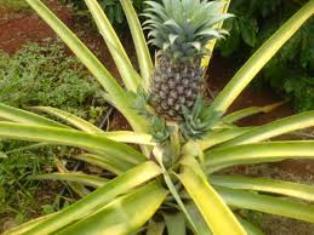
HONG KONG: A team of researchers from different scientific institutions successfully carried out a genome sequencing of the pineapple in order to isolate the specific genes and pathways that allow the plant to exist even in areas where there is limited water supply.
In a study featured in the Nature Genetics journal, scientists from the University of Illinois and other research organizations set out to understand the evolutionary history of certain species of grass that share distant ancestry with the pineapple such as rice and sorghum.


Pineapples have been used by humans as a food source for more than 6,000 years. The first crops were cultivated in the South American region that is now occupied by the modern-day states of Paraguay and Brazil.
The fruit can now be found in more than 85 different countries, which produce around 25 million metric tons of crops annually and contribute to an international industry worth close to $9 billion.
Scientists have discovered that early pineapple and grass species experienced numerous doublings of their genomes as part of a process known as whole-genome duplications.
By tracing the pathways of these duplications, researchers hope to have a better understanding of the plants’ independent and shared evolutionary histories.