
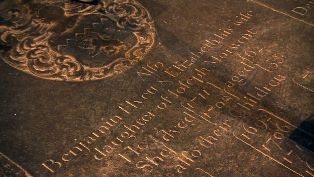
CANADA: Archeologists have discovered a family burial vault dating back to the 18th century and containing remains of all members of a family at Gloucester Cathedral.
According to archeologists, the tomb in the North Transept of the cathedral contains coffins with remains of Hyett family dating from the 17th and 18th Century. The tomb is in “extremely well preserved” and intact condition despite the cathedral having undergone restoration work several times in past years. The remains in the coffins include some skulls and leg bones.


The tomb was discovered when archaeologists lifted a ledger stone to inspect a section of the cathedral ahead of new lift installation under Project Pilgrim. The lifting of the stone created a small hole which allowed archeologists to see the contents of the vault. Archeologists said the coffins contain the remains of a “pretty wealthy” Hyett family that was able to afford having a burial vault built at the heart of the cathedral. The names plates on the coffins are still present and match the names present on the ledgers above.
The 17th century records revealed that Benjamin Hyett was born on March 30, 1651 in Dursley, Gloucestershire, and got married to Elizabeth Morwent in 1674. Elizabeth died in 1708 at the age of 55 and, and after three years, Benjamin also died at the age of 62.
“[W]e can just see into a genuine intact family vault,” said cathedral archaeologist Richard Morris, who considers the discovery of the 8-feet deep chamber as completed unexpected.
“What you normally find when you dig up a ledger slab is earth and bones, there’s nothing specific in there. But we can just see into a genuine intact family vault.”
“You would expect the cathedral to have been restored time and time again. The floors get churned up and re-laid, but this has stayed intact. The coffins are extremely well preserved; you can still see the name plates.”
“And the name plates actually match up with the names on the ledgers above, which is remarkable.”



