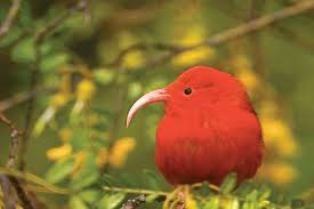
MEXICO: Rare and unique bird species inhabiting the higher elevations of forests on the Hawaiian Islands could lose more than half of their habitat if climate changes predicted by the end of the century come to pass, researchers say.
Habitat losses, along with disease and predators such as feral cats, have threatened the vulnerable species for years, driving many into smaller and smaller habitat ranges in mountain forests.


They have survived there because native vegetation they need for food and protection persists, and because the cooler temperatures keep the number of disease-transmitting mosquitoes down, researchers explain.
However, if climate change continues unchecked, loss of suitable habitat could affect many remaining forest bird species in Hawaii, scientists with the U.S. Geological Survey say in a study appearing in PLOS ONE.
Six species could lose as much as 90 percent of their current habitat range, they say.
Like rare species elsewhere, Hawaiian forest birds have very specific habitat requirements and adaptations that could limit their ability to move into new ranges if their current habitats shrink.
The main threat climate change could present is disease, as warming temperatures in the forests could allow mosquitoes that carry diseases such as avian malaria across to higher mountain elevations, researchers explain.
Of the 113 endemic bird species that existed on the islands when humans first arrived there, 71 have gone extinct, they point out.
Of the remaining 42 species, 33 are listed as endangered.