Customs Today
  • Home
  • Islamabad
  • Karachi
  • Lahore
  • National
  • Transfers and Postings
  • Chambers & Associations
  • Business
No Result
View All Result
Customs Today
  • Home
  • Islamabad
  • Karachi
  • Lahore
  • National
  • Transfers and Postings
  • Chambers & Associations
  • Business
No Result
View All Result
Customs Today
No Result
View All Result
Home Science & Technology Science

Archaeologists discovered 22 shipwrecks from Greek

byCustoms Today Report
06/11/2015
in Science, Science & Technology
Share on FacebookShare on Twitter

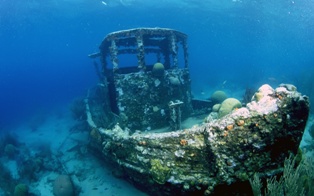
MALI: Archaeologists have discovered 22 shipwrecks in what they are calling the shipwreck capital of the world.

In a 13-day expedition to the Fourni archipelago, a collection of 13 Greek islands and islets in the eastern Aegean Sea, archaeologists found wreckage from 22 shipwrecks, a news release provided by Peter Campbell, a director of the project, said.


You might also like

Tesla driverless system to use updated radar technology

12/09/2016

Apple to develop its own self-driving technology

10/09/2016

The wrecks “bring to light ancient trade networks that once connected the entire Mediterranean,” according to the news release.

“This is what is so interesting and unique: most big shipwreck collections we have are from harbors,” Campbell told ABC News Thursday. “But Fourni is a collection of ships that were on their way rather than in a destination, so it tells us how they navigated.”

The expedition, which took place at the end of September and was launched and funded by the Greek Ephorate of Underwater Antiquities and the Honor Frost Foundation, spanned 17 square miles, Jeffrey Royal, archaeological director at RPM Nautical Foundation and a director of the project, told ABC News Thursday.

He added that archaeologists uncovered wrecks from the Archaic, Classical, Hellenistic, Roman, Late Roman and Late Medieval periods, an expanse of over 1,000 years.

“The dates are derived from the amphoras — large clay jars that were containers for the cargo being shipped,” Royal said. “The consumable cargo was primarily wine, olive oil and fish products, but also likely included fruits, nuts, specialty wines and sauces.”

The findings are undergoing conservation at the Greek Ephorates laboratory, Royal said, and further studies will reveal more information about the cargo and help narrow the date ranges.


Related Stories

Tesla driverless system to use updated radar technology

byCT Report
12/09/2016

WASHINGTON: Electric carmaker Tesla announced Sunday it was upgrading its Autopilot software to use more advanced radar technology. In a...

Apple to develop its own self-driving technology

byCT Report
10/09/2016

SAN FRANCISCO: Apple may not become an automaker, but it still wants to develop its own self-driving technology. The iPhone-maker's...

NASA spots slowest known magnetar

byCT Report
10/09/2016

WASHINGTON: Astronomers have found evidence of a magnetar - magnetised neutron star - that spins much slower than the slowest...

‘YouTubers’ outshining old-school television

byCT Report
09/08/2016

SAN FRANCISCO: A media revolution is taking place, and most people over 35 years of age aren’t tuned in. Millennial...

Next Post

Cooperative bank's profit increases 36.6% to Sh8.62 bln in Kenya

  • Terms and Conditions
  • Disclaimer

© 2011 Customs Today -World's first newspaper on customs. Customs Today.

No Result
View All Result
  • Transfers and Postings
  • Latest News
  • Karachi
  • Islamabad
  • Lahore
  • National
  • Chambers & Associations
  • Business
  • About Us

© 2011 Customs Today -World's first newspaper on customs. Customs Today.