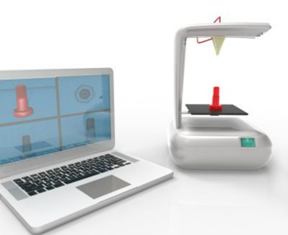
WASHINGTON: Researchers have developed a 3D printing technology that creates medical devices such as catheters for premature newborns and surgical implants customised according to individual patients.
The biomedical devices they are developing will be both stronger and lighter than current models and, with their customised design, ensure an appropriate fit.


One specific application of this new technology is developing patient-specific catheters, especially for premature newborns.
“With neonatal care, each baby is a different size, each baby has a different set of problems,” said lead researcher Randall Erb, assistant professor at Northeastern University in US.
“If you can print a catheter whose geometry is specific to the individual patient, you can insert it up to a certain critical spot, you can avoid puncturing veins, and you can expedite delivery of the contents,” said Erb.
The new technology enables researchers to control how the ceramic fibres are arranged – and hence control the mechanical properties of the material itself, the researchers said.
That control is critical if you are crafting devices with complex architectures, such as customised miniature biomedical devices.
Within a single patient-specific device, the corners, the curves, and the holes must all be reinforced by ceramic fibres arranged in just the right configuration to make the device durable.