Customs Today
  • Home
  • Islamabad
  • Karachi
  • Lahore
  • National
  • Transfers and Postings
  • Chambers & Associations
  • Business
No Result
View All Result
Customs Today
  • Home
  • Islamabad
  • Karachi
  • Lahore
  • National
  • Transfers and Postings
  • Chambers & Associations
  • Business
No Result
View All Result
Customs Today
No Result
View All Result
Home Science & Technology Science

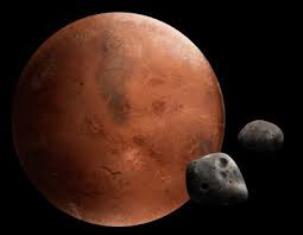
Mars tearing its two moons

byCustoms Today Report
11/11/2015
in Science, Science & Technology
Share on FacebookShare on Twitter

LONDON: Mars is slowly tearing apart one of its two moons, and the circling body, dubbed Phobos, could eventually completely disappear, astronomers say.

No need to mark your calendars, they say, since we’re talking 30 to 50 million years from now.

You might also like

Tesla driverless system to use updated radar technology

12/09/2016

Apple to develop its own self-driving technology

10/09/2016

Parallel grooves on the surface of Phobos, once believed fractures left behind by a long-ago cosmic collision with another body, are now thought to be early signs of a structural failure that will lead to eventual destruction — like slowly widening cracks in a sidewalk.

That long ago impact came close to shattering Phobos and left it an agglomeration of rubble held together by a thin surface crust, scientists suggest, essentially just a big orbiting sack of rocks.

The gravitational pull of Mars on Phobos may be weakening that outer layer, they say; the moon is closer to Mars that any other moon in the solar system is to its planet, orbiting at just 3,700 miles above the Red Planet.

“We think that Phobos has already started to fail, and the first sign of this failure is the production of these grooves,” says Terry Hurford of NASA’s Goddard Space Flight Center in Greenbelt, Md.

Scientists have characterized the grooves seen on the surface of Phobas as “stretch marks,” strong evidence the outer surface of the moon, which may be no more than 100 meters thick, is slowly being deformed by the tidal forces of Mars’ gravity.

“The funny thing about the result is that it shows Phobos has a kind of mildly cohesive outer fabric,” says Erik Asphaug of the School of Earth and Space Exploration at Arizona State University in Tempe.


Related Stories

Tesla driverless system to use updated radar technology

byCT Report
12/09/2016

WASHINGTON: Electric carmaker Tesla announced Sunday it was upgrading its Autopilot software to use more advanced radar technology. In a...

Apple to develop its own self-driving technology

byCT Report
10/09/2016

SAN FRANCISCO: Apple may not become an automaker, but it still wants to develop its own self-driving technology. The iPhone-maker's...

NASA spots slowest known magnetar

byCT Report
10/09/2016

WASHINGTON: Astronomers have found evidence of a magnetar - magnetised neutron star - that spins much slower than the slowest...

‘YouTubers’ outshining old-school television

byCT Report
09/08/2016

SAN FRANCISCO: A media revolution is taking place, and most people over 35 years of age aren’t tuned in. Millennial...

Next Post

Ice gravity, Earth structure variations could affect melting of Antarctic Ice, research

  • Terms and Conditions
  • Disclaimer

© 2011 Customs Today -World's first newspaper on customs. Customs Today.

No Result
View All Result
  • Transfers and Postings
  • Latest News
  • Karachi
  • Islamabad
  • Lahore
  • National
  • Chambers & Associations
  • Business
  • About Us

© 2011 Customs Today -World's first newspaper on customs. Customs Today.