Customs Today
  • Home
  • Islamabad
  • Karachi
  • Lahore
  • National
  • Transfers and Postings
  • Chambers & Associations
  • Business
No Result
View All Result
Customs Today
  • Home
  • Islamabad
  • Karachi
  • Lahore
  • National
  • Transfers and Postings
  • Chambers & Associations
  • Business
No Result
View All Result
Customs Today
No Result
View All Result
Home Science & Technology Science

Ice gravity, Earth structure variations could affect melting of Antarctic Ice, research

byCustoms Today Report
11/11/2015
in Science, Science & Technology
Share on FacebookShare on Twitter

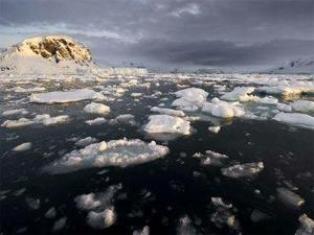
CANADA: Researchers from New York University, McGill University and Pennsylvania State University found that the projected melting of Antarctic ice may be delayed or influenced by two things that are most often disregarded in present computer simulation models: ice gravity and Earth structure variations.

Significant unpredictability of anticipations about future sea level rise have been greatly influenced by the durability of Antarctic Ice Sheet (AIS) marine sectors in a warming climate. The decline of sea levels close to the grounding line of receding marine ice sheet has major effects on the ice sheets. Studies in the past have also confirmed the value of this feedback on the AIS evolution during the ice age.


You might also like

Tesla driverless system to use updated radar technology

12/09/2016

Apple to develop its own self-driving technology

10/09/2016

In a new study, the authors used a model that connects ice sheet and sea levels to analyze the effects of the feedback mechanism on AIS fall back over a period of a century or millennium. Different emission schemes were also applied.

Gravity is most often associated with the force that enables people’s feet to stay put on the ground. However, the concept actually pertains to the force that pulls two objects towards each other. The larger the object, the more forceful is the gravitational pull; such is the case in massive ice sheets, which attracts other bodies, including water.

As per analysis of their models, the researchers found that as the West Antarctic Ice Sheet (WAIS) melts, the gravitational pull also decreases. The decline is so significant that it is sufficient enough to lower sea levels close to the ice. Such effect would delay the anticipated pace of ice sheet retreat.

The researchers also found another vital factor in their computer model simulations. In case the ice sheet melts, the ice load would fall down, freeing the solid ground underneath it and causing a rebound upward effect.


Related Stories

Tesla driverless system to use updated radar technology

byCT Report
12/09/2016

WASHINGTON: Electric carmaker Tesla announced Sunday it was upgrading its Autopilot software to use more advanced radar technology. In a...

Apple to develop its own self-driving technology

byCT Report
10/09/2016

SAN FRANCISCO: Apple may not become an automaker, but it still wants to develop its own self-driving technology. The iPhone-maker's...

NASA spots slowest known magnetar

byCT Report
10/09/2016

WASHINGTON: Astronomers have found evidence of a magnetar - magnetised neutron star - that spins much slower than the slowest...

‘YouTubers’ outshining old-school television

byCT Report
09/08/2016

SAN FRANCISCO: A media revolution is taking place, and most people over 35 years of age aren’t tuned in. Millennial...

Next Post

Singapore stocks weaker at open

  • Terms and Conditions
  • Disclaimer

© 2011 Customs Today -World's first newspaper on customs. Customs Today.

No Result
View All Result
  • Transfers and Postings
  • Latest News
  • Karachi
  • Islamabad
  • Lahore
  • National
  • Chambers & Associations
  • Business
  • About Us

© 2011 Customs Today -World's first newspaper on customs. Customs Today.