Customs Today
  • Home
  • Islamabad
  • Karachi
  • Lahore
  • National
  • Transfers and Postings
  • Chambers & Associations
  • Business
No Result
View All Result
Customs Today
  • Home
  • Islamabad
  • Karachi
  • Lahore
  • National
  • Transfers and Postings
  • Chambers & Associations
  • Business
No Result
View All Result
Customs Today
No Result
View All Result
Home Science & Technology Science

Astronomers discovered oldest known stars at heart of Milky Way

byCustoms Today Report
12/11/2015
in Science, Science & Technology
Share on FacebookShare on Twitter

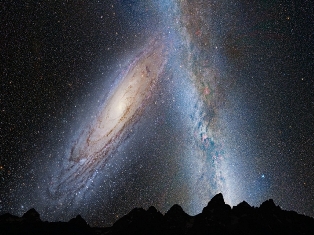
CANADA: Astronomers have discovered the oldest known stars near the centre of the Milky Way galaxy, dating back to the time when the universe was just 300 million years old.

The stars are surprisingly pure but contain material from an even earlier star, which died in an enormous explosion called hypernova, the researchers said.


You might also like

Tesla driverless system to use updated radar technology

12/09/2016

Apple to develop its own self-driving technology

10/09/2016

“These pristine stars are among the oldest surviving stars in the universe, and certainly the oldest stars we have ever seen,” said lead author Louise Howes, a PhD student at the Australian National University (ANU) Research School of Astronomy and Astrophysics.

“These stars formed before the Milky Way, and the galaxy formed around them,” said Howes.

The discovery and analysis of the nine pure stars challenges current theories about the environment of the early universe from which these stars formed.

“The stars have surprisingly low levels of carbon, iron and other heavy elements, which suggests the first stars might not have exploded as normal supernovae,” said Howes.

“Perhaps they ended their lives as hypernovae – poorly understood explosions of probably rapidly rotating stars producing 10 times as much energy as normal supernovae,” she said.

Project leader Martin Asplund, professor at ANU Research School of Astronomy and Astrophysics said finding such rare relic stars among the billions of stars in the Milky Way centre was like finding a needle in a haystack.

“The ANU SkyMapper telescope has a unique ability to detect the distinct colours of anaemic stars – stars with little iron – which has been vital for this search,” said Asplund.


Related Stories

Tesla driverless system to use updated radar technology

byCT Report
12/09/2016

WASHINGTON: Electric carmaker Tesla announced Sunday it was upgrading its Autopilot software to use more advanced radar technology. In a...

Apple to develop its own self-driving technology

byCT Report
10/09/2016

SAN FRANCISCO: Apple may not become an automaker, but it still wants to develop its own self-driving technology. The iPhone-maker's...

NASA spots slowest known magnetar

byCT Report
10/09/2016

WASHINGTON: Astronomers have found evidence of a magnetar - magnetised neutron star - that spins much slower than the slowest...

‘YouTubers’ outshining old-school television

byCT Report
09/08/2016

SAN FRANCISCO: A media revolution is taking place, and most people over 35 years of age aren’t tuned in. Millennial...

Next Post

Japan's wholesale prices fall 3.8% in 2015

  • Terms and Conditions
  • Disclaimer

© 2011 Customs Today -World's first newspaper on customs. Customs Today.

No Result
View All Result
  • Transfers and Postings
  • Latest News
  • Karachi
  • Islamabad
  • Lahore
  • National
  • Chambers & Associations
  • Business
  • About Us

© 2011 Customs Today -World's first newspaper on customs. Customs Today.