Customs Today
  • Home
  • Islamabad
  • Karachi
  • Lahore
  • National
  • Transfers and Postings
  • Chambers & Associations
  • Business
No Result
View All Result
Customs Today
  • Home
  • Islamabad
  • Karachi
  • Lahore
  • National
  • Transfers and Postings
  • Chambers & Associations
  • Business
No Result
View All Result
Customs Today
No Result
View All Result
Home Science & Technology Science

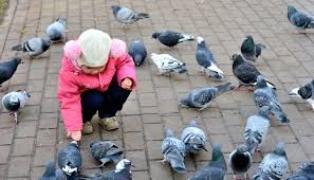
Feeding birds may spread diseases in humans, new study

bySana Anwar
16/11/2015
in Science, Science & Technology
Share on FacebookShare on Twitter

WASHINGTON: Feeding birds in parks may not only negatively affect their health and behaviour but also help spread diseases in humans, a new study suggests.

Researchers from the University of Georgia in US studied how being fed by humans is changing the health, ecology and behaviour of white ibises in south Florida, where construction and land development is drying up their wetland habitats. The birds normally feed on aquatic animals like fish, snails and crayfish, but they are now becoming accustomed to being fed items such as bread, fast food and popcorn by people at parks, said Sonia Hernandez, an associate professor at University of Georgia.


You might also like

Tesla driverless system to use updated radar technology

12/09/2016

Apple to develop its own self-driving technology

10/09/2016

This shift in feeding behaviour could have serious consequences not just for the white ibises, she said, but also to people.

“In a previous study, and using molecular typing methods, we found that the strains of salmonella bacteria that white ibises are infected with are the same that some people get sick from, particularly in Florida,” Hernandez said. “Because white ibises move from urban to natural environments readily, they might be responsible for moving these strains around over large distances,” she said. The findings could apply to other wildlife species that have grown cozy with humans at public parks and other human-altered landscapes, she said.

The white ibis are normally nomadic, can travel for miles every day and spend much of their day searching for food. “But why expend energy searching for food when humans at public parks will give it to them,” said Sonia Altizer, a professor at the Odum School of Ecology in US. This shift towards more sedentary behaviour could allow pathogens transmitted through feces, like salmonella, to build up and pose risks for both birds and humans.


Related Stories

Tesla driverless system to use updated radar technology

byCT Report
12/09/2016

WASHINGTON: Electric carmaker Tesla announced Sunday it was upgrading its Autopilot software to use more advanced radar technology. In a...

Apple to develop its own self-driving technology

byCT Report
10/09/2016

SAN FRANCISCO: Apple may not become an automaker, but it still wants to develop its own self-driving technology. The iPhone-maker's...

NASA spots slowest known magnetar

byCT Report
10/09/2016

WASHINGTON: Astronomers have found evidence of a magnetar - magnetised neutron star - that spins much slower than the slowest...

‘YouTubers’ outshining old-school television

byCT Report
09/08/2016

SAN FRANCISCO: A media revolution is taking place, and most people over 35 years of age aren’t tuned in. Millennial...

Next Post

Customs Second Secretary Faisal assumes charge in Legal Wing

  • Terms and Conditions
  • Disclaimer

© 2011 Customs Today -World's first newspaper on customs. Customs Today.

No Result
View All Result
  • Transfers and Postings
  • Latest News
  • Karachi
  • Islamabad
  • Lahore
  • National
  • Chambers & Associations
  • Business
  • About Us

© 2011 Customs Today -World's first newspaper on customs. Customs Today.