Customs Today
  • Home
  • Islamabad
  • Karachi
  • Lahore
  • National
  • Transfers and Postings
  • Chambers & Associations
  • Business
No Result
View All Result
Customs Today
  • Home
  • Islamabad
  • Karachi
  • Lahore
  • National
  • Transfers and Postings
  • Chambers & Associations
  • Business
No Result
View All Result
Customs Today
No Result
View All Result
Home Science & Technology Science

Astronomers discover a distant galaxy with a pulse

bySana Anwar
17/11/2015
in Science, Science & Technology
Share on FacebookShare on Twitter

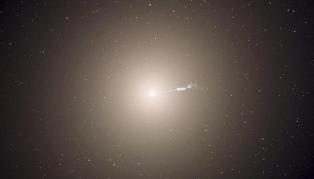
FRANCE: Astronomers at Yale and Harvard have found a galaxy with a heartbeat—and they’ve taken its pulse.

It is the first time scientists have measured the effect that pulsating, older red stars have on the light of their surrounding galaxy. The findings are published in the Nov. 16 online edition of the journal Nature.


You might also like

Tesla driverless system to use updated radar technology

12/09/2016

Apple to develop its own self-driving technology

10/09/2016

“We tend to think of galaxies as steady beacons in the sky, but they are actually ‘shimmering’ due to all the giant, pulsating stars in them,” said Pieter van Dokkum, the Sol Goldman Professor and chair of astronomy at Yale, and co-author of the study.

Later in life, stars like our Sun undergo significant changes. They become very bright and swell up to an enormous size, swallowing any planets within a radius roughly equivalent to Earth’s distance from the Sun. Near the end of their lifetime, they begin to pulsate, increasing and decreasing their brightness every few hundred days. In our Milky Way galaxy, many stars are known to be in this phase.

Until now, no one had considered the effects of these stars on the light coming from more distant galaxies. In distant galaxies the light of each pulsating star is mixed with the light of many more stars that do not vary in brightness.

“We realized that these stars are so bright and their pulsations so strong that they are difficult to hide,” said Charlie Conroy, an assistant professor at Harvard, who led the research. “We decided to see if the pulsations of these stars could be detected even if we could not separate their light from the sea of unchanging stars that are their neighbors.”


Related Stories

Tesla driverless system to use updated radar technology

byCT Report
12/09/2016

WASHINGTON: Electric carmaker Tesla announced Sunday it was upgrading its Autopilot software to use more advanced radar technology. In a...

Apple to develop its own self-driving technology

byCT Report
10/09/2016

SAN FRANCISCO: Apple may not become an automaker, but it still wants to develop its own self-driving technology. The iPhone-maker's...

NASA spots slowest known magnetar

byCT Report
10/09/2016

WASHINGTON: Astronomers have found evidence of a magnetar - magnetised neutron star - that spins much slower than the slowest...

‘YouTubers’ outshining old-school television

byCT Report
09/08/2016

SAN FRANCISCO: A media revolution is taking place, and most people over 35 years of age aren’t tuned in. Millennial...

Next Post

Finished steel imports grow 5% from China in Jan-Sept 2015

  • Terms and Conditions
  • Disclaimer

© 2011 Customs Today -World's first newspaper on customs. Customs Today.

No Result
View All Result
  • Transfers and Postings
  • Latest News
  • Karachi
  • Islamabad
  • Lahore
  • National
  • Chambers & Associations
  • Business
  • About Us

© 2011 Customs Today -World's first newspaper on customs. Customs Today.