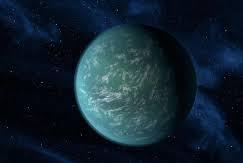
MEXICO: One of the most Earth-like exoplanets may be uninhabitable, meaning, it may not be capable of supporting alien life according to a new study published by University of Warwick researchers this week.
Earlier this year, astronomers announced the discovery of the Kepler 438b, an exoplanet located 470 lightyears away. Unlike other exoplanets discovered before it, the 438b is special because scientists say it’s located in the habitable zone, informally called Goldilocks Zone where the temperature is just right for liquid water to stay or flow in the surface (of a planet).


For instance, Earth is within the Solar System’s habitable zone. In addition, Mars and dwarf planet Ceres are also in the Solar System’s Goldilocks Zone. Kepler 438b, which is just 12 percent wider than Earth, orbits its host star every 35 days. Scientists from the Harvard-Smithsonian Center who discovered the exoplanet said the amount of light, and the size of this planet makes it one of the most Earth-like planets yet found beyond the borders of our Solar System — but according to the Warwick-led research, Kepler 438b may be uninhabitable because it receives too much radiation blasted off by its red dwarf host star.
Published in the Monthly Notices of the Royal Astronomical Society Tuesday, researchers say they’ve detected regularly occurring superflares every 100 days, and these superflares are ten times more powerful than those ever recorded in our Solar System. One stroke is equivalent to the same energy emitted by 100 billion megatons of TNT.
Researchers believe that these powerful flares coming from the red dwarf are powerful enough to strip away any atmosphere on the Kepler 438b.
“Unlike Earth’s relatively quiet Sun, the Kepler-438 emits strong flares every few hundred days,” says lead researcher Dr. David Armstrong. “Each one is stronger than the most powerful flare recorded on our Sun.”
Dr. Armstrong is a member of the university’s Astrophysics Group.
According to Dr. Armstrong, it’s highly likely that the superflares from the red dwarf are associated with coronal mass ejections which can easily damage the habitability of the planet.