

WASHINGTON: Earth might be surrounded by huge hairs of dark matter, according to one scientist. The regular matter that we can see around us only makes up 5 per cent of the universe.
The rest is composed by dark matter, which makes up 27 per cent of everything that exists but is invisible to us, as well as dark energy. Dark energy and dark matter have never been seen or directly detected, despite repeated attempts. But it must exist because of the structure of the universe, and scientists have been able to estimate how much of it there is with huge accuracy.
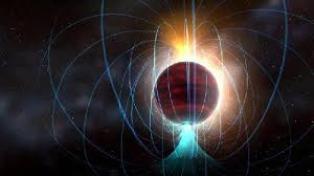
And now scientists have said that the streams of dark matter that are crisscrossing around us are focused into an “ultra-dense filament”, or a hair of dark matter, when they go through a planet. There are likely many of them sprouting out of Earth and other rocks in the solar system, according to Gary Prézeau of NASA’s Jet Propulsion Laboratory.
Normal matter would not be able to go through the Earth. But dark matter can stream through it and simulations show that as it does so it is focused and bent into a narrow, thin hair. Those filaments are similarly-shaped to real hair. They have roots, where they are densely concentrated, and tips at the end. Scientists now hope that simulating the shape of the dark matter will allow them to harvest much more data about it.
“If we could pinpoint the location of the root of these hairs, we could potentially send a probe there and get a bonanza of data about dark matter,” Prézeau said. Because the threads are so dense and would be even more dense around other planets, like Jupiter – it would be much easier to get information about them.
“Dark matter has eluded all attempts at direct detection for over 30 years. The roots of dark matter hairs would be an attractive place to look, given how dense they are thought to be,” said Charles Lawrence, chief scientist for JPL’s astronomy, physics and technology directorate. Scientists also think that the hairs’ shape would reflect the changes in density in the planet.
That could mean that they would be able to map out the inside of planets, including the life-supporting oceans that might be hidden inside of them, just by looking at the dense concentrations of dark matter.

Karachi Port sets 138-year cargo handling record
KARACHI: Pakistan's maritime sector has achieved a major milestone as Karachi Port set a new record in its 138-year history...