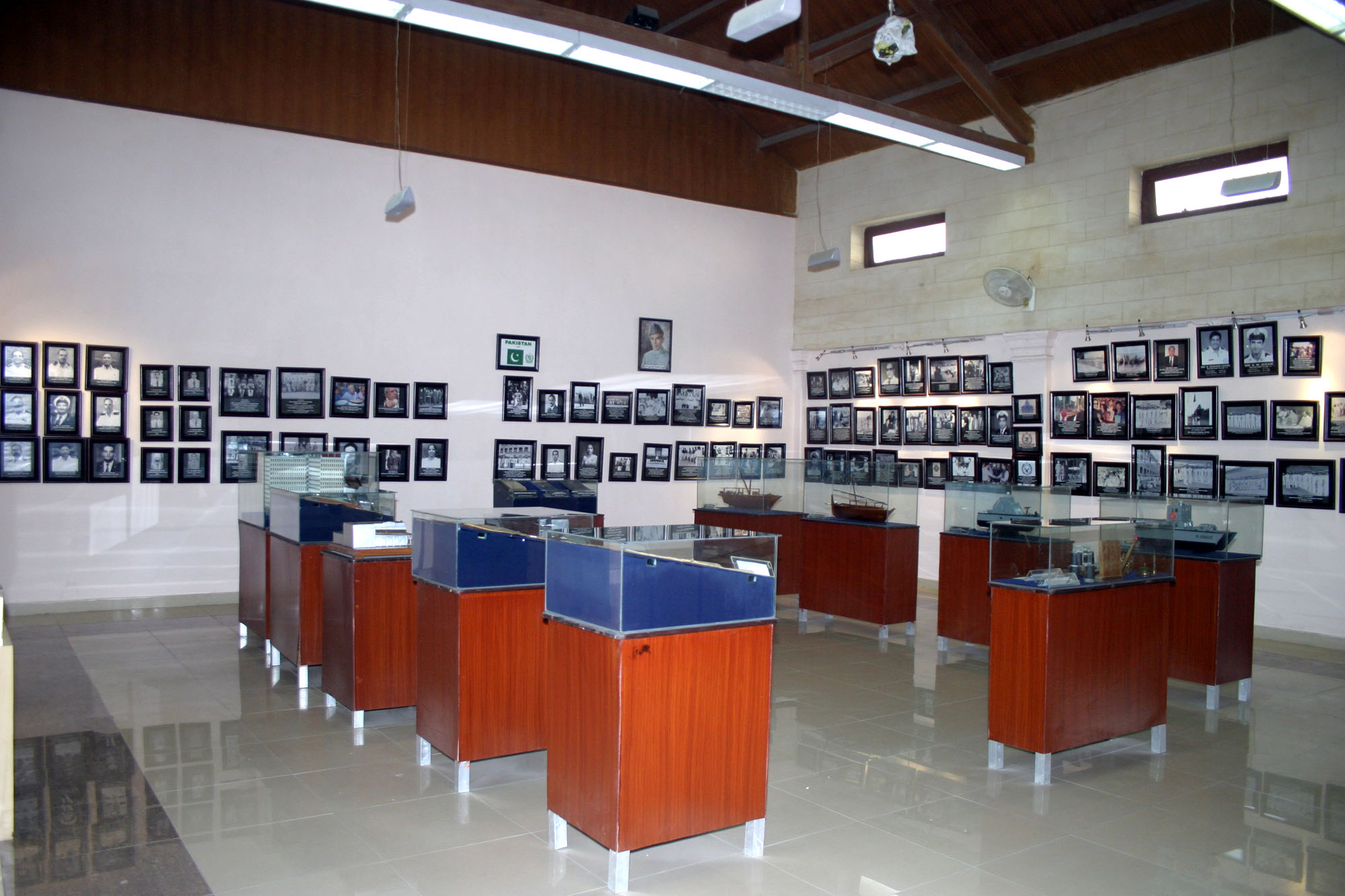
KARACHI: One of the treasures of Pakistan Customs lies hidden in the Directorate of Training and Research Building. It is known as ‘The Kamil Museum of Customs’.
It is an embodiment of the process of evolution of customs in Pakistan, and a testament to its vital role in the national economy. The museum has been named after Mr Kamil Hassan, Senior Preventive Officer (SPO), who has tirelessly collected all the assets on display in the museum.


The Kamil Museum brings together the history of Customs in the country from 1878, which witnessed the growth of the Collectorate of Customs in Karachi, up to the modern times. The museum contains photographs of the houses of the old customs officials, original and recreated artefacts in order to relive the history of Pakistan Customs in its social as well as administrative contexts.
The museum also contains the photographs and complete history of the first Collector, first Chief Collector, old Customs House, old epaulettes, the first logo designated to Customs in 1878, after its establishment, first Sea Customs Act 1878 and first preventive officer of Customs.
The Kamil Museum reveals the entire history of the Customs Department through its preserved assets. When the East India Company aborted its mission in India during 1874, the charge of Indian Government was taken over by the Majesty’s Crown in United Kingdom. At that time, the necessity of a Customs Act was felt and accordingly Sea Customs Act was enacted in 1878. Her Royal Majesty Queen Victoria approved the Sea Customs Act 1878 and allotted Her Majesty’s Crown to be worn by Customs officers which were inscribed on shoulder epaulettes and peaked caps. The Department of Customs was designated as (HMC) “Her Majesty Customs”.
The Bombay Presidency was a former province of British India. In the 17thcentury, it was made a trading post of the British East India Company, but later it grew to include much of Western and Central India as well as part of Sindh, (now Pakistan).
During the British rule, Governor of Bombay Presidency Sir James Fergusson, the next high ranking person after the Viceroy, made the first appointments to HM Customs in Karachi, subsequent to the promulgation of the Sea Customs Act 1878.
The First Collector of Customs, CA Gaton, was appointed in 1878 and Edward Hamilton Aitkin, the First Chief Collector of Customs, was appointed for Karachi in 1906.
The Governor in Council of Bombay Presidency issued a notification on April 12, 1901 under section 11 of Sea Customs Act 1878 and declared Karachi as Chief Port of Sindh and attached six minor ports to it for the purpose of shipment and landing of goods.
The Customs Administration was regulated by Sea Customs Act 1878 and other allied acts were in operation up to 1969 in Pakistan, when all the statutory provisions were consolidated and the Pakistan Customs Act 1969 was enacted.
Brief history of Customs building: On 17th February 1902, the Finance and Commerce Department of the Bombay Presidency allocated a piece of land to the Customs and Port Trust Authority for the construction of its permanent offices. G Wittet, a consulting architect to the Government of Bombay, prepared a plan for construction of joint building, which was made in the Victorian style.
The construction of joint KPT-Customs Building commenced in 1910 and was completed in 1914. The total cost of the completion was around US$57,338 – but the newly-constructed building was first used by the military in World War I as a hospital and transit camp. After, the end of the war, the building was inaugurated by His Excellency Lord Willington, Governor Bombay Presidency on January 5, 1916.
The first meeting of the Board of Port Trustees and Customs was held in the newly-constructed premises on January 12, 1916. Since then, it was used by the Customs Department till it was shifted to new Customs House on May 18, 1987.
The founder of the museum, Senior Preventive Officer (SPO) in Customs Department, Kamil Hassan while sharing his views with Customs Today said that he spent his 25 years on research and collecting the data since the establishment of the Customs House.
“The things from 1878 have been discovered and brought into the museum during the last 25 years”, he said, adding, “I have also been nominated for the Pride of Performance Award by the government.”
It is worth mentioning here that TMO Reilly was the first Secretary of the Customs Preventive Service Club from (1916-1933) and Kamil Hassan has the honour of serving as the 23rd Secretary of the club.