Customs Today
  • Home
  • Islamabad
  • Karachi
  • Lahore
  • National
  • Transfers and Postings
  • Chambers & Associations
  • Business
No Result
View All Result
Customs Today
  • Home
  • Islamabad
  • Karachi
  • Lahore
  • National
  • Transfers and Postings
  • Chambers & Associations
  • Business
No Result
View All Result
Customs Today
No Result
View All Result
Home Latest News

Chinese customs officers stop traveller returning from Ethiopia with bag of toxic beans

byCT Report
02/03/2016
in Latest News
Share on FacebookShare on Twitter

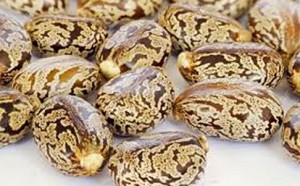
BEIJING: Customs officials in southern China have stopped a traveller returning from Ethiopia with a bag containing hundreds of highly toxic jequirity beans, according to mainland media.

The man was carrying 100g of the seeds when he was stopped by inspectors at Guangzhou Baiyun International Airport in Guangdong province, the Southern Daily reported.


You might also like

DG Valuation revises import values for polyester yarn amid war crisis vide VR No.2069/2026

21/04/2026

OICCI proposes 5pc cap on withholding tax, calls for reforms

21/04/2026

The hard red and black seeds are attractive but highly poisonous and found mainly found in India. They are native to Southeast Asia, including Hong Kong.

The seeds are popular in ornaments and jewellery or even rosary beads, hence one of their other common names, rosary peas.

The passenger arriving in Guangzhou told airport staff that he picked the seeds from trees in Ethiopia due to their bright colour.

It’s unknown whether the man knew anything about the toxicity of the seeds, or had any idea that most countries have strict regulation about importing plants.

Airport staff sent the seeds sent to the airport’s Quarantine Bureau’s phytosanitary laboratory, which confirmed their identity.

There have been reports on the mainland on people being poisoned, often fatally, by eating the beans or wearing bracelets or necklaces made from them.

The botanical name, Abrus precatorious, refers to the presence of abrin, a toxic compound that stops cells making proteins. It has a similar effect to ricin, one of the world’s most poisonous substances, derived from the seeds of the castor oil plant, Ricinus communis, which are also popular as beads or in instruments like maracas.

The castor oil plant is also native to Hong Kong.

Ricin is relatively easy to make, and has been linked to a number of attempted and successful assassinations. In 1978, the Bulgarian dissident Georgi Markov was stabbed in the leg from behind with an umbrella carrying a tiny pellet of the substance while crossing London’s Waterloo Bridge.

There is no antidote to ricin poisoning and Markov died four days later.



Related Stories

DG Valuation revises import values for polyester yarn amid war crisis vide VR No.2069/2026

byCT Report
21/04/2026

KARACHI: The Directorate General of Customs Valuation, a division of the FBR, issued Valuation Ruling No. 2069/2026 on April 16,...

OICCI proposes 5pc cap on withholding tax, calls for reforms

byCT Report
21/04/2026

KARACHI: The Overseas Investors Chambers of Commerce and Industry (OICCI) has proposed capping withholding tax rates at 5%, urging the...

Zong launches Pakistan’s first 5G facilitation Kiosk at Islamabad Airport

byCT Report
21/04/2026

ISLAMABAD: Zong, Pakistan’s leading technology services enterprise, has set a new industry benchmark by launching the country’s first dedicated 5G...

LHC allows Rs11.2b cost equalisation adjustment deduction for SNGPL in tax dispute

byCT Report
21/04/2026

LAHORE: The Lahore High Court has ruled that the Cost Equalisation Adjustment claimed by Sui Northern Gas Pipelines Limited qualifies...

Next Post

HK Customs seizes cocaine, meth

  • Terms and Conditions
  • Disclaimer

© 2011 Customs Today -World's first newspaper on customs. Customs Today.

No Result
View All Result
  • Transfers and Postings
  • Latest News
  • Karachi
  • Islamabad
  • Lahore
  • National
  • Chambers & Associations
  • Business
  • About Us

© 2011 Customs Today -World's first newspaper on customs. Customs Today.