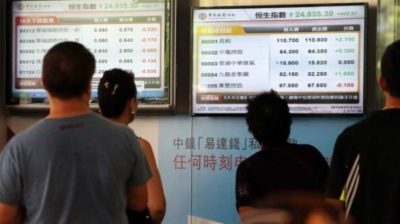
SINGAPORE: Asia markets lost ground on the final trading day of the week, following losses in U.S. stocks overnight amid concerns over earnings.
The Australian ASX 200 was down 0.58 percent, led by declines in the energy, materials and financials subindexes. In Japan, the Nikkei 225 halted its three-day advance, shedding 0.09 percent. Across the Korean Strait, the Kospi was down 0.36 percent. In Hong Kong, the Hang Seng index fell 0.73 percent.
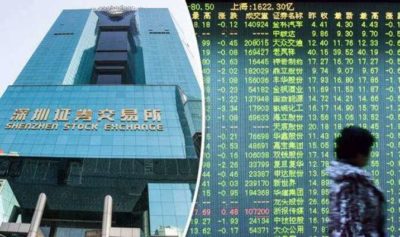
Chinese mainland markets were mixed, with the Shanghai composite down 0.47 percent and the Shenzhen composite falling 0.17 percent.
Analysts reckoned there might be some profit-taking at play in the markets today. Evan Lucas, a market strategist at IG, said ASX market internals “show glaring profits, and possible buyer exhaustion,” with 84 percent of ASX 200 companies above their 50-day moving average.
Global benchmark Brent futures were up 1.08 percent at $45.01 a barrel as of 10:53 a.m. HK/SIN, after dropping 2.8 percent during U.S. hours. U.S. crude futures were up 1.13 percent at $43.67, after dropping 2.26 percent overnight.
The decline in oil overnight came as Reuters reported market intelligence firm Genscape suggested a build-up of more than 840,000 barrels in U.S. crude at the Cushing, Oklahoma, delivery point in the four days to April 19.
In the currency market, the dollar held on to the 94 handle against a basket of currencies, with the dollar index at 94.511 as of 10:54 a.m. HK/SIN.
The Japanese yen remained fairly steady, with the pair trading at 109.43, following an overnight finish at 109.44. Major Japanese exporters were mixed, with shares of Toyota up 0.43 percent, Nissan up 0.24 percent and Honda adding 0.51 percent. Shares of Sony were down 2.85 percent. Usually a relatively weaker yen is a positive for exporters as it increases their overseas profits when converted into local currency.
Shares of Mitsubishi Motors were down 13.21 percent, following a 20 percent drop on Thursday after the company’s executives admitted the company cheated on fuel economy tests.
Reuters, citing several Japanese media, said the carmaker reportedly manipulated fuel economy data on an additional car model apart from the vehicles already disclosed; it may have also misstated data on four other models, according to Sankei newspaper.
Japan’s Transport Minister Keiichi Ishii said he wanted Mitsubishi Motors to possibly buy back the affected cars, according to Kyodo news.
The country’s Internal Affairs Minister, Sanae Takaichi, was quoted by Jiji news agency saying car buyers will not have to pay back Japanese government subsidies for any Mitsubishi vehicles that may fall outside the fuel economy subsidies bracket.
Elsewhere, the Australian dollar was stronger against the U.S. dollar, trading at $0.7754, after finishing at $0.7737 overnight, but it’s down from Asian hours on Thursday, when it touched the $0.78 level.
Stephen Innes, a senior foreign exchange trader at OANDA, said reversal in oil prices overnight sent the Aussie downward during U.S. hours. “The stronger dollar weighed negatively on commodity prices and coupled with lower prices in the oil patch, the Aussie sold off in convincing fashion,” he said.
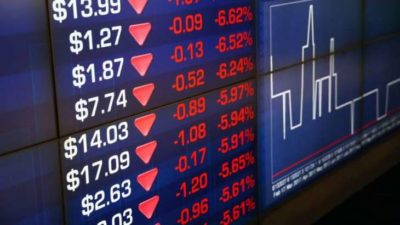
Declines in Asia markets followed a lower finish stateside, where the Dow Jones industrial average closed down 0.63 percent, the S&P 500 fell 0.52 percent and the Nasdaq composite shed 0.05 percent.
Major indexes in the U.S. reacted negatively to earnings from United, Travelers and Verizon – the latter closed 3.3 percent lower as one of the greatest contributors to declines in the Dow.