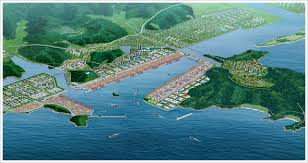
SEOUL: South Korea’s ports registered declines in throughput in both container and overall tonnage volumes in April with the country’s largest port, Busan, succumbing to the challenges of changing alliance routings, slowing China-related business and historically low fuel prices.
Container volumes handled at the country’s ports declined by 2.5 percent to 2.15 million 20-foot-equivalent units during the month of April when compared with the previous year and total cargo tonnage fell 1.2 percent to 119.32 million tons. Busan, which handles more than three quarters of the country’s containers, had a tough month with volumes dropping 5.2 percent to 1.58 million TEUs. Volumes are down by just under 1.9 percent on a year-to-date basis, with 6.39 million TEUs handled in the first four months of the year.
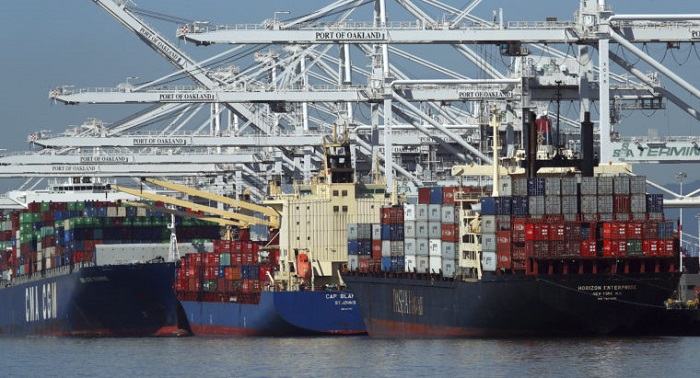

For the Busan Port Authority, the most worrying aspect of the April numbers is a sharp 7.2 percent drop in transshipment business. Busan has a focus on developing transshipment business as part of its strategy to offset its reliance on gateway and China-related business and is aiming to become the world’s second-largest transshipment hub after Singapore. The port handled more than 10 million transshipment containers for the first time in its history last year and has a range of strategies in play to grow transshipment volumes, including cash incentives to shipping companies that put high volumes of transshipment cargo through the port.
“We seek to hedge against the downturn in container throughput of Busan Port, which is driven by import and export between Korea and China by attracting more transshipment containers, and so offset the predicted decrease in trade cargo with China,” BPA Chief Executive Officer Woo Ye Jong told JOC.com in a recent interview. The drop in April transshipment volumes to 789,000 TEU was due to a combination of adjustments to transshipment routes by at least one of the shipping alliances, slowing demand for transshipment services to China, and the low price of oil.
The lower fuel price also impacted volumes by making it more economical to extend existing services to call at more ports directly, as opposed to products that existed previously with transshipment along routes. This is an important reason behind recent throughput declines at main global transshipment hubs including Singapore and Hong Kong. BPA has a keen eye on ongoing changes in the make-up of the alliances and the fate of Hyundai Merchant Marine, which accounts for around 5 percent of the port’s total transshipment volumes.
Busan’s gateway business fell 3 percent in April, dragged down by the decline in South Korean exports to China, which fell 18.4 percent in value terms, the 10th month of continuous declines. South Korea’s exports to the U.S. fell by just over 4.1 percent in the first four months of the year, while those to Vietnam rose by 9 percent in the same period.
The port of Incheon fared well in April, with container volumes rising 11 percent to a record 223,000 TEUs. Import volume increased by 12.3 percent year-over-year to 119,000 TEUs, comprising over 53 percent of total throughput. Exports grew 10.6 percent to 102,102 TEUs.
The growth was attributed to increased investment by Korean manufacturers in Vietnam as well as an increase in imports of textiles, electronic parts and general merchandise from China. Volumes at Kwangyang, South Korea’s third-largest container port, shrank 2.6 percent to 210,000 TEUs, with gateway business falling 4.9 percent. Transshipment-related volumes expanded by nearly 27 percent, but from a very small base.