Customs Today
  • Home
  • Islamabad
  • Karachi
  • Lahore
  • National
  • Transfers and Postings
  • Chambers & Associations
  • Business
No Result
View All Result
Customs Today
  • Home
  • Islamabad
  • Karachi
  • Lahore
  • National
  • Transfers and Postings
  • Chambers & Associations
  • Business
No Result
View All Result
Customs Today
No Result
View All Result
Home Science & Technology Science

Now you can listen to 13 billion year-old stars

byCT Report
08/06/2016
in Science
Share on FacebookShare on Twitter

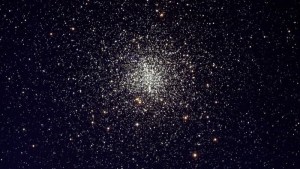
LONDON: A team of astrophysicists from the University of Birmingham has successfully used Kepler data to capture the sounds emitted by ancient stars. The study focused on eight red giant stars, the smallest of which is many times the mass of our Sun, and almost three times its current age.

The study drew on Kepler observations of stars in the M5 globular cluster. Located roughly 7,200 light-years away in the constellation Scorpius, M5 is thought to be around 13 billion years old, making it one of the most ancient star clusters in the Milky Way.
You might also like

Astronomers discover distant dwarf planet beyond Neptune

12/07/2016

Nasa’s Juno successfully begins orbit of Jupiter

05/07/2016

The team from the University of Birmingham used a technique known as astroseismology to observe resonant oscillations in the stars that are thought to be responsible for brief pulses of brightness, created as sound trapped inside the star interacts with its interior. The astronomers were able to listen to the notes of a stellar chorus created by the oscillations, and estimate the age and mass of the sample stars.

“We were thrilled to be able to listen to some of the stellar relics of the early universe,” states Dr Andrea Miglio of the University of Birmingham’s School of Physics and Astronomy. “The stars we have studied really are living fossils from the time of the formation of our Galaxy, and we now hope be able to unlock the secrets of how spiral galaxies, like our own, formed and evolved.”

The sounds created by the oscillations in the red giants can be listened to on the university website (see link below). The smallest of the stars, which would still dwarf our own Sun, emits a relatively high note, while the most massive of the eight sample stars lets off a much deeper pitch.


Related Stories

Astronomers discover distant dwarf planet beyond Neptune

byCT Report
12/07/2016

LONDON: A dwarf planet half the size of Britain has been found tumbling through space in the most distant reaches...

Nasa’s Juno successfully begins orbit of Jupiter

byCT Report
05/07/2016

MIAMI: Nasa's unmanned Juno spacecraft has begun orbiting Jupiter, a key triumph for a $1.1 billion mission that aims to...

Coal dust kills 23,000 per year in European countries

byCT Report
05/07/2016

PARIS: Lung-penetrating dust from coal-fired power plants in the European Union claims some 23,000 lives a year and racks up...

Helium shortage could be solved by new life-saving discovery

byCT Report
28/06/2016

LONDON: Scientists might finally have overcome a global shortage of helium – potentially saving millions of lives in the process....

Next Post

Mexico ends tariffs on U.S. apple imports

  • Terms and Conditions
  • Disclaimer

© 2011 Customs Today -World's first newspaper on customs. Customs Today.

No Result
View All Result
  • Transfers and Postings
  • Latest News
  • Karachi
  • Islamabad
  • Lahore
  • National
  • Chambers & Associations
  • Business
  • About Us

© 2011 Customs Today -World's first newspaper on customs. Customs Today.