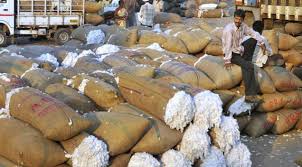
KARACHI: The textile millers have rejected Senate committee’s recommendation for imposing regulatory duty on import of cotton from India through Wagah border.
All Pakistan Textile Mills Association (Aptma) Chairman Tariq Saud, in a statement, said that the recommendation of Senate Standing Committee on National Food Security and Research is based on the false data provided to them which has no basis. He said that the ginners have not more than 100,000 bales of cotton, which they will trade off before the arrival of the new crop.

Furthermore, the stocks available with the ginners and the Trading Corporation of Pakistan (TCP) are of very low quality, which can only be used in the open-end processing or producing lower count of yarn.
Saud also said that Federal Finance Minister Ishaq Dar in his Budget speech has accepted that due to the failure of cotton crop by around 35 percent this year, the growth rate has declined by around 0.5 percent.
“The failure of local cotton crop by around 35 percent has placed extra burden on the industry to import more than five million bales of cotton to meet the consumption requirement of the spinning industry,” he added.
The Aptma chairman said that this decline in cotton production in the country has not only affected the operations of basic textile industry, which was already suffering due to high cost of doing business and shortage of energy in the country, but also resulted in surge in import of cotton yarn and fabrics.
Due to high cost of doing business and other factors the domestic industry is unable to compete in the international market, which can be confirmed from the fact that in the 11 months of the current financial year, the imports of cotton yarn has almost doubled as compared to 2014-15.
The Aptma chairman said that India does not give any subsidy to their farmers on export of cotton to Pakistan. Further, India after independence has undertaken variety of Land Reforms including modern farming system whereas no Land Reforms and modern cotton farming technology have been introduced in Pakistan as yet.