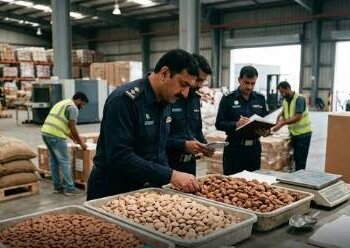
LABUAN: The Customs Department will restudy its proposals to impose curbs on the import and sales of “hot items” beer, spirits and cigarettes.
The new proposals when implemented will have adjustments reflecting accommodation of the suggestions made by Labuan.


“This is one of the outcomes of the inaugural meeting of the newly-established special task force for Labuan development held in Putrajaya on Wednesday evening,” Member of Parliament Datuk Rozman Isli, who led the Labuan representatives in the meeting, said.
The two-hour meeting chaired by Deputy Prime Minister Datuk Seri Ahamd Zahid Hamidi was also attended by Federal Territories Minister Daruk Seri Tengku Adnan Mansor, the relevant ministries’ secretaries-general, former Labuan MPs, Labuan Umno division chief and heads of government departments.
Rozman said it was unclear what adjustments would be made by the department, but he was happy that the voice of Labuan regarding the proposals had been heard.
“I am confident that the amended measures to curb the smuggling menace would be a reasonably softer approach and not too hurtful to the local economy, we expect a win-win solution.”
The Customs have planned to impose, effective from November 1, curbs on Labuan’s duty-free status by way of limiting the number of importers and retailers of cigarettes, spirits and beer to slightly more than The measure would result in only selected duty-free shops allowed to sell the items and even that would be restricted to not more than three cartons of beer, five litres of spirit and three reams of cigarettes per non-Muslim individual per month. As Labuan economy is still largely dependent on the sales of these items to keep its economy vibrant and attract visitors to the island, the Customs proposals triggered vociferous complaints and objections from many sectors.
Rozman said another decision made by the task force was to speed up the establishment of the planned Mara Junior Science College (MRSM) here. He added that about 50 acres have been identified for the project at the Kiansam area. Apart from the college, steps will also be taken to upgrade Universiti Malaysia Sabah – Labuan International Campus (UMSKAL), with possible inclusion of more schools of studies and a larger student intake. The campus was established here in 1998 with a yearly intake of about 900 students and the total student population was around 2,000.
Though in operations for more than 10 years, the campus has seen little expansion and remains with two schools of studies –Information, Technology and International Finance – compared to UMS Kota Kinabalu, which has more than 5,000 students.
Rozman said the vocational training schools may also be upgraded. He said the increase of student population on the island would benefit the local economy and bring Labuan closer to achieving the education hub status.