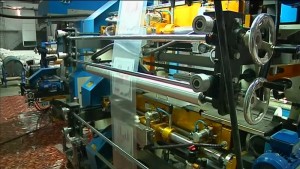
BASRA: Iraq’s southern city of Basra has a new state-of-the-art plastics facility. The venture, worth more than 15 million dollars, produces a wide range of products ranging from plastic bags to sheeting and pipes and is aiming to reduce the country’s need for imports.
The facility also includes Basra’s first recycling production line, which converts waste plastic into useable materials. The Head of the Basra Investment Commission, Ali Chasib, said the plant had ‘International Organisation of Standardisation’ certification and was able to produce a wide variety of goods.


“The facility produces all types of PVC products including rubbish bags, medical plastic bags, plastic pipes and plastic sheeting used in agriculture and greenhouses. The project is an ISO-registered company and has a high production capacity of all its production lines, which makes it a strong competitor that can meet the demands of the province and might even cover the demands of other provinces,” he said.
The factory, which is on a 4,000 square metre site, has cutting edge machinery and four production lines. It can produce up to 25,000 tonnes of plastic products for agricultural and industrial purposes and up to 10,000 tonnes of oil and sewage pipes of different sizes and diametres, per year. Chasib said that with such a high output, Basra province could become self-sufficient, when it came to plastic products.
“We need a study and a database showing how much is being produced in the province and how much is being used in the province and other provinces. We need the Ministers’ Council to decide on either of a total ban of imports of plastic products, if local production can cover the demand, or a partial ban of exports and a control of imported goods to boost the local economy,” he said.
Many of Iraq’s 260 factories were either looted in the aftermath of the U.S. invasion in 2003 or are outdated or located in restive areas. But Basra has benefited from a higher number of local and foreign investors over the past few years, attracted by the relative stability in southern Iraq and the advantages of being Iraq’s oil hub and only port city. Qusay al-Khazali, an engineer and an investor in the plastics plant, said it was a unique facility in southern Iraq.
“It is the first ever (factory) in Basra province and to the best of my knowledge, in the the southern region. There might be some factories, but they do not have the same international and European standards. It is number one in Basra,” he said. However, he said the factory, which employs at least 100 workers, needed government backing to try and limit the flood of cheap products coming into the country.
“The factory will help boost local production, so we demand direct support from the local government because, as you know, all the products made here are being imported either from China, India, the Gulf states or from neighbouring countries. The factory has started production and will definitely compete for control in the local market. It will also employ a large workforce, so any support for the factory is, in fact, support for the province in general,” Khazali said, adding that there were already plans to double the number of employees.
Iraq’s government released a five-year economic plan in 2013, aiming to try and diversify beyond oil production and develop the country’s industrial sector. The plan for the years 2013 to 2017 calls for investment of approximately $357 billion in development projects across the country, focusing in particular on five sectors: building and services, agriculture, education, transport and communications, and energy.