JAKARTA: As the largest and prominent developing countries in the world, both China and Indonesia are emerging Asian economies aiming for industrialization and modernization. Despite challenges, cooperation between the two countries is promising under the background of globalization and regional integration.
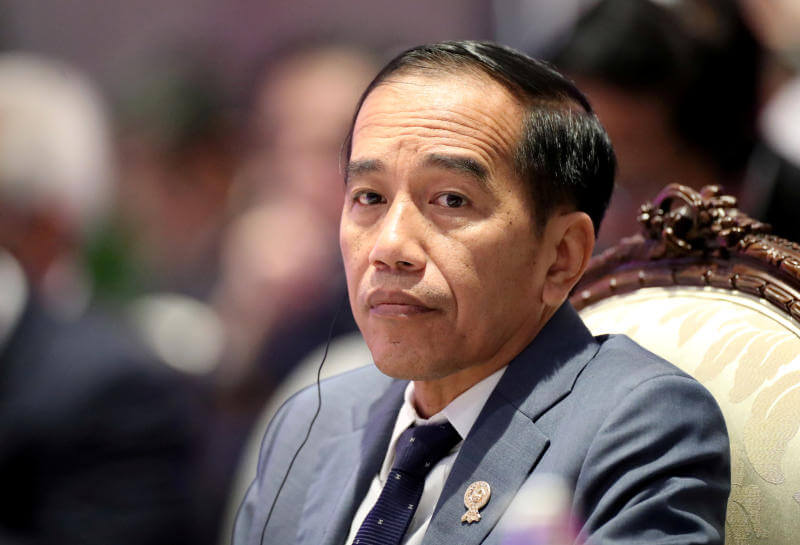
Indonesian President Joko Widodo was invited to Hangzhou for the G20 summit earlier this month. Widodo’s interactions with Chinese entrepreneurs on the sidelines of the meetings have attracted a great deal of attention. Some media outlets even conjecture that Indonesia will entirely rely on China for development.

Since democratic reform in 1999, Indonesia has become a constitutional democracy after a painful transition, and domestic politics remains stable in general. Indonesia’s economy, with domestic demands as an impetus, has maintained an average growth rate of 5 percent since 2005. However, the devaluation of the Indonesian rupiah, dilatory bureaucrats, underdeveloped infrastructure and an under-performing manufacturing industry have restrained the country’s economic growth.
Since coming into office in 2014, Widodo has carried out deep reforms in areas such as administration, taxation and investment. Indonesia offers one-stop service for foreign investors, absolves tax dodgers, fights against gangs in the logistics industry and has simplified procedures for customs clearance. These measures have boosted investors’ confidence and improved Indonesia’s investment environment.
With the acceleration of the Association of Southeast Asian Nations (ASEAN) integration, Indonesia is increasingly pressured by competition with neighboring countries. A great leap in development is possible only if Indonesia draws in foreign investment, absorbs advanced technologies and imports foreign capacities. From Widodo’s perspective, China is an ideal candidate for cooperation.
China’s rapid growth is inspiring. At the sideline of the G20 summit, Widodo urged overseas Indonesian students to learn from China’s rapid development, adding that while China has managed to build 2,000-kilometer railway in just one year, the construction of 140-kilometer Jakarta-Bandung high speed railway is full of twists and turns. Widodo claimed that the Jakarta-Bandung railway has realized 60 percent of land acquisition, and expects to finish the rest of the project in 2016 jointly with China.
In addition, Indonesia wants to take advantage of China’s high technology for development. During his visit to China, Widodo visited Huawei and explored the likelihood of telecommunications support to Indonesia. Huawei has offered technical training support to six Indonesian universities at present, and Indonesian officials claimed that the company is highly likely to provide technical support for the 2018 Asian Games.