COLOMBO: Sri Lankan businesses alarmed over weakening export competitiveness are praying for prime ministerial intervention to prod lethargic bureaucrats into implementing a law passed 10 years ago to accept electronic signatures.
Delays in accepting electronic signatures by government agencies owing to bureaucratic inefficiency is preventing use of e-commerce and eroding Sri Lanka’s competitiveness, raising costs for businesses and citizens alike, a study by Verité Research, a think-tank, said.


“This is a cost for every single citizens in the country – their cost of living, their wealth and well being are affected because we are administratively inefficient,” said Nishan de Mel, Executive Director of Verité Research.
“For 20 years businesses have been trying to get electronic documentation through Customs,” he told a news conference. “Why is Sri Lanka taking 76 hours to process trade documents when Singapore an do it in four hours?”
De Mel said how fast documents can move is critical for the island to achieve its ambition of being a logistics and transhipment hub for the region. Subashini Abeysinghe, Head of Economics at Verite Research, said the delay in accepting electronic signatures by government agencies is a “problem of attitude” since the law was already in place.
“People don’t want to get this done,” she said. “Some have vested interests, shifting to electronic commerce means they will lose the perks and privileges in the manual system – there’s a lot of corruption, bribery, money exchanged to get your trade done.”
Bureaucratic lethargy is also costing the country foreign direct investment since big multinationals like Toyota and Samsung would only set up manufacturing plants in countries where it is easy to do business.
“We have failed to attract export-oriented FDI. These companies come only if they know we have very efficient trading platforms,” Abeysinghe said.
“Paperless trade can enhance our export competitiveness. We are fast losing our comparative advantage – labour cost and availability. We are finding it very difficult to compete in international markets. This (paperless trade) can help reduce costs and save time.
“We have a fabulous location and want to be the next logistics hub. How can we be competitive in logistics if cross-border transactions take more time than in Dubai and Singapore? We are far behind even India and Pakistan.”
Government officials were still insisting on a duplicate manual process of documents signed by hand although the law, the Electronic Transactions Act, No 19 of 2006, supersedes existing laws, enabling government agencies to draft their own guidelines on acceting electronic signatures.
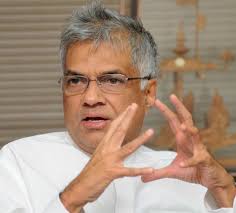
Dinesh de Silva, Chairman of the Import Section of the Ceylon Chamber of Commerce, said they hope Prime Minister Ranil Wickremesinghe will intervene to get bureaucrats to act since the law was in place and only institutional guidelines were needed.
“We need an order from the top – a single ministry may not be able to do it on its own,” he said. “This has to come from the highest level – it can be driven by the Prime Minister. If pressure comes, this can be implemented in days.”
Reluctance by government officials to accept electronic signatures is holding up wider use of an electronic ‘single-window’ platform launched in May 2016 by Sri Lanka Customs and the Finance Ministry meant to speed up export-import documentation, Verité Research said.