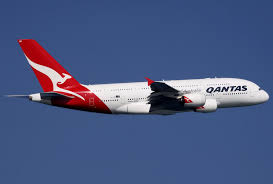
SINGAPORE: Qantas reports lower first quarter revenues, expects reduced first half profit. Qantas says it expects a decline in underlying profit before tax (PBT) and ongoing domestic capacity reductions after reporting a drop in revenue for the first three months of 2016/17.
In its first quarter trading update, Qantas said underlying PBT for the six months to December 31 2016 was forecast to be in the range of $800 million to $850 million, compared with $921 million in the prior corresponding period.


“That range would represent the third-best first half result in Qantas’ history,” the company said on Monday.
Qantas said capacity across the airline group, measured by available seat kilometres (ASK), was now forecast to increase 1.5-2 per cent in the first half, compared with previously issued guidance of 2-3 per cent. All of that increase will be in overseas flying, given Qantas said domestic capacity across both its Qantas and Jetstar airlines was expected to decline one per cent in the half.
Chief executive Alan Joyce said the airline group’s cost-reduction transformation program and flexible capacity management across its Qantas and Jetstar brands had the company well-placed to deliver a “strong first half profit result” for 2016/17.
“The group’s reduced cost base, disciplined financial framework, and portfolio strategy give us the foundations to keep performing well even in a more challenging international revenue environment,” Joyce said in a statement on Monday.
“Like most carriers globally, we are seeing international air fares below where they were 12 months ago, but the impact of that is tempered by the competitive advantages we’ve been working hard to fortify including our strong domestic position and diversified Loyalty business.”
Revenue across the airline group fell three per cent to $3.98 billion in the three months to September 30 2016, compared with $4.11 billion in the prior corresponding period. Meanwhile, unit revenue, measured by revenue per available seat kilometres (RASK), fell 5.5 per cent in the quarter.
Qantas said the result was due to “increased competition on international routes and a subdued domestic demand environment in the first two months of the year”.
On a more positive note, Qantas said the domestic market had reverted to more stable conditions in September, following a couple of months of “demand softness” in July and August due to the federal election and other one-off events that positively impacted trading conditions in the prior year.