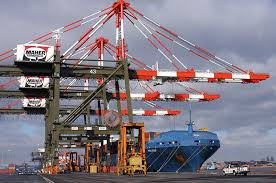
WASHINGTON: Maher Terminals, the largest terminal in the Port of New York and New Jersey, has been acquired by Macquarie Infrastructure Partners III and a subsidiary of Japanese shipping company NYK Line. The closing of the previously announced sale comes eight years after a unit of Deutsche Bank acquired Maher in 2007 at the height of the pre-recession container import boom, when several large terminal operators changed hands at historically high multiples.
As trade growth slowed following the recession, Deutsche Bank wrote off much of its purchase price, which was listed at $1.86 billion in court documents filed last year. The price had earlier been reported at as much as $2.3 billion. Macquarie, a global infrastructure investment fund that is part of Macquarie Infrastructure and Real Assets, will own 80 percent of the terminal. NYK will control the remaining 20 percent through its NYK Ports subsidiary.

Financial details were not released on the transaction, which Macquarie announced last April and was confirmed by a source on Wednesday. The 454-acre terminal handles about 2 million 20-foot-equivalent units a year, roughly one-third of the port’s total. New York-New Jersey, the largest on the East Coast and the third-largest in the US, handled 6,371,720 TEUs last year.
New York-New Jersey’s container volume is expected to rise further with the completion at the end of next year of a project to raise the 151-foot vertical clearance under the Bayonne Bridge to 215 feet. The project will allow larger ships to reach Maher and two other Port Newark/Elizabeth terminals that now cannot be served by many vessels. The capacity of ships blocked by the bridge’s current height varies according to the vessel’s design, but generally includes ships with capacities of more than 10,000 TEUs. Raising the bridge will allow the port to gain full benefit of a decade-long dredging program, completed in September, that deepened the port’s main channels to 50 feet. Still, the port is expected to face significant challenges in accommodating growth, and these difficulties could be made worse by the heavier cargo surges that result from larger ships.
NYK, which confirmed the closing of the terminal’s sale, said the acquisition was made “in accordance with its medium-term management plan ‘More Than Shipping 2018.’” The company said it “will continue its efforts to strengthen its global network and improve synergy between terminals and container ships.”