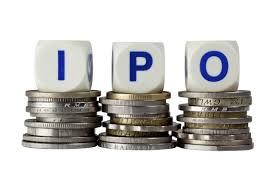
RIYADH: Financial giants and stock exchanges around the world are competing to get a piece of what promises to be the world’s largest initial public offering – the sale of shares in Saudi Arabia’s state-managed oil company.
Saudi Aramco has an estimated value of over $2 trillion, Saudi Deputy Crown Prince Mohammad bin Salman announced in April. The commission fees that a Saudi Aramco IPO would earn for financial institutions acting as arrangers are also seen to be the biggest in history. The leading oil company has 16 percent of the world’s crude-oil inventory, or more than 310 billion barrels of oil including natural gas. That is over 10 times the reserves of Exxon Mobil (NYSE:XOM), the largest private oil provider in the United States. Even though comparisons are complex, the existing market capitalization of Exxon Mobil is nearly $350 billion.

Saudi Aramco pumps 10 million barrels per day and still has enough room to increase output. According to reports, the company has the lowest production costs in the world. As political connections between Saudi Arabia and the United States have weakened, investment banks in Britain now anticipate Saudi Aramco to choose to list in London instead of New York. Banks have already started estimating the benefits they would receive in the Saudi Aramco agreement. Mohammad bin Salman explained that the oil company intends to sell less than 5 percent of its shares. If Saudi Aramco’s value is approximated at $2 trillion, 5 percent of that is $100 billion. Suggesting that it is four times the record $25 billion raised by Chinese online retailer Alibaba Group (NYSE:BABA) in its 2014 IPO. During that time, arrangers received a total of $300 million in commission fees. Considering that, it is not impossible that Saudi Aramco’s IPO could achieve more than $1 billion for potential arrangers.
Based on US media reports, Saudi Aranco has assigned JPMorgan Chase (NYSE:JPM) for listing arrangement and Citigroup’s (NYSE:C) Michael Klein as an adviser. Major banks around the world are all pursuing an arranger role. In choosing arrangers, the Saudi government is believed to take into consideration the financial institutes’ contribution records and to attempt to acquire conditions advantageous to the government. In its initial offshore bond sales of $17.5 billion in October, the government appointed JP Morgan, HSBC (NYSE:HSBC) of Britain and Citi as lead arrangers. Banks in Japan, Germany, France and China were also part of the arrangement process. Their involvement in the bond sales slightly mirrors their ambition to have an edge in getting similar opportunities in connection with Saudi Aramco’s IPO.