WASHINGTON: The financial impact of November’s earthquake on the region’s port remains unclear, its boss says. Port Marlborough chief executive Ian McNabb said although no change was expected for cruise ship traffic or the log trade, other freight was being shipped from Auckland to Lyttleton. Before the 7.8 magnitude quake, freight was transported to Wellington and then ferried across to Picton, before being transported to Christchurch by rail and road, he said. McNabb was speaking at the Marlborough District Council’s planning, community and finance committee last week as he presented the company’s annual report.
It made sense shipping freight from Auckland to Lyttleton, but it meant the traffic was not coming through the port, he said after the meeting. “What’s happening is that there is some freight being put on a particular international shipping line, on their normal rotation,” McNabb said. “It gets some trucks off the road.” The port, one of the busiest in New Zealand, was owned by council company MDC Holdings. McNabb did not know how much traffic the shipping line was taking away from the port, but suspected it was only some and not all. He had “absolutely no idea” what the financial impact would be at this stage. It depended partly on how long State Highway 1 between Ward and Christchurch would be closed. There was no reason why Marlborough’s log trade would be affected, he said. Nearly 660,000 tonnes of logs were exported through the port in the 2015/2016 financial year.
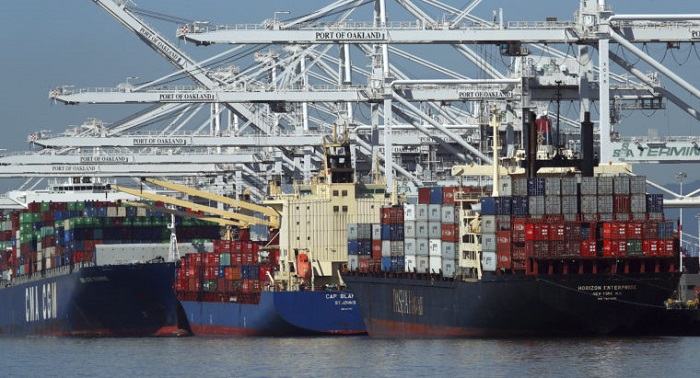

According to the company’s annual report the port’s revenues lifted by 5.5 per cent to $25.85 million on the back of strong log exports. Thirty-five cruise ships visited the port that year. A couple of cruise ships were cancelled this season due to weather, but that was nothing to do with the earthquake, McNabb said. Whether ferry travellers would be as willing to drive the long way up to Christchurch to take the Interislander or Bluebridge ferries to the North Island remained to be seen, he said. “Are passengers still going to come? We don’t know,” McNabb told the committee. An Interislander media spokesperson said the company had a larger number of cancellations than usual following the earthquake, but bookings were tracking at 5 per cent above last year.”It is looking to be a busy summer season,” the spokesperson said.
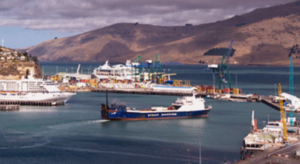
McNabb said the total damage sustained to the port in the earthquake was less than 1 per cent of the total worth of Port Marlborough, $170m. There were still a “couple of things left to do” in the port, and the most important one was fixing the Bluebridge ramp, which the company Strait Shipping used to load up their ferries.
McNabb expected repairs to be completed next week. It was all relative, but compared to Lyttleton in the Christchurch earthquakes the port had escaped unscathed, McNabb said. McNabb also spoke to the committee about the future of Havelock, which was running out of land when it came to the demands of the mussel industry. The company Aroma, of Christchurch, had relocated to Havelock and 230 people were currently employed by fishing company Sanfords in the township, McNabb said.There was demand for another two buildings related to the mussel industry. However the infrastructure, such as water and sewerage, had to be in place. “We are going to need to think about what comes next.”