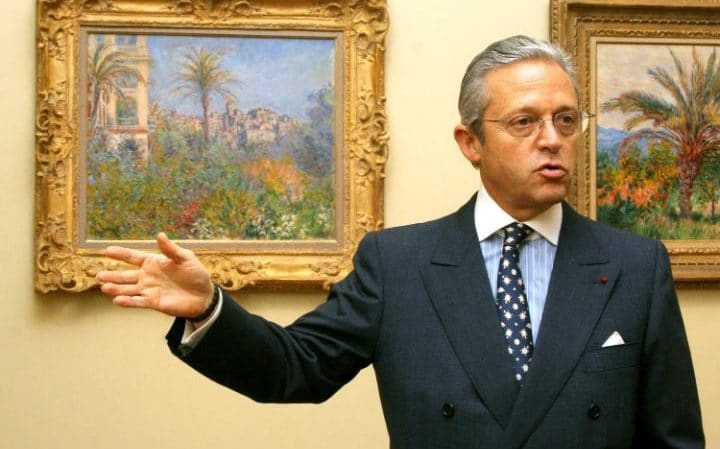
PARIS: The beneficiaries to of one of the world’s greatest art dynasties administrations were acquitted of hiding masterpieces from Caravaggio to Picasso in offshore asylums to dodge the French taxman in spite of what the judge called their “clear intention” to do as such.
French tax authorities say the Guy Wildensteins (accused) owe them some €550 million, which is the subject of a separate civil case.


According to details, Guy Wildenstein and his entourage were accused of lying about the size of the estate at the 2001 death of the family patriarch, Daniel, who amassed a vast art fortune, and his eldest son, Alec in 2008.
The prosecutor had also called for a six-month suspended sentence against the French-American art dealer’s nephew Alec Junior, and a year’s suspended term for Liouba Stoupakova, 42, Alec’s widow who is herself in conflict with her in-law.
However, in a surprise verdict, presiding judge Olivier Géron acquitted the heirs and a string of advisors of tax fraud and “aggravated” money laundering.
Accepting that the verdict might be “misunderstood”, he said that while there a “clear intention” on the Wildenstein family’s part to hide their wealth, gaps in the investigation and grey areas in French tax law made it impossible to pronounce a guilty verdict.
“The law must be applied the same way to “the powerful as to the poor,” he told the court. The heirs were not present.
Guy and Alec Wildenstein together declared just €40.9 million for inheritance tax purposes in 2002. To pay the bill, they handed over bas-reliefs sculpted for Marie-Antoinette, the wife of Louis XVI.
Prosecutors charged them with playing down the extent of his fortune via a web of opaque trusts and tax havens came to light thanks to a string of complaints from ex-wives and widows, who felt short-changed in divorce or inheritance settlements.
Among the masterpieces listed in the trusts are a Gustave Courbet, Biche Forcée, Effet de Neige, valued at €8.2 million, along with two works by Pierre Bonnard, The fruit basket, oranges and persimmon, and Boulevard de Clichy, by night, each valued at €2.3 million. A Picasso, Mme Georges Wildenstein, is valued at €1.6 million.
The court sought to put a price tag on masterpieces spread between the United States, Switzerland and Singapour, which it said amounted to $875 million (£716 million).
Throughout the trial, Wildenstein insisted that he knew little about the financial structures his brother and father had put in place. He has also argued that there was no legal obligation to report trust-held assets on his father’s death.
The judge said he found it “astonishing” that France had only tightened its laws on trusts in 2011 despite a century of debate over their abuse. He also criticized investigators for not going further to prove that the Wildensteins continued to personally benefit from these offshore trusts.
Wildenstein’s lawyer, Hervé Temime, said his client was “very relieved”.
“The error was to take this to criminal court. People are too keen to please public opinion but there are some judges who respect the law,” he said, adding that he feared a backlash over claims there is a “justice for the rich”.
A notary, two lawyers and two trusts, the Northern Trust Fiduciary Services in Guernesey and the Royal Bank of Canada Trust Company (RBCTC), were also acquitted.