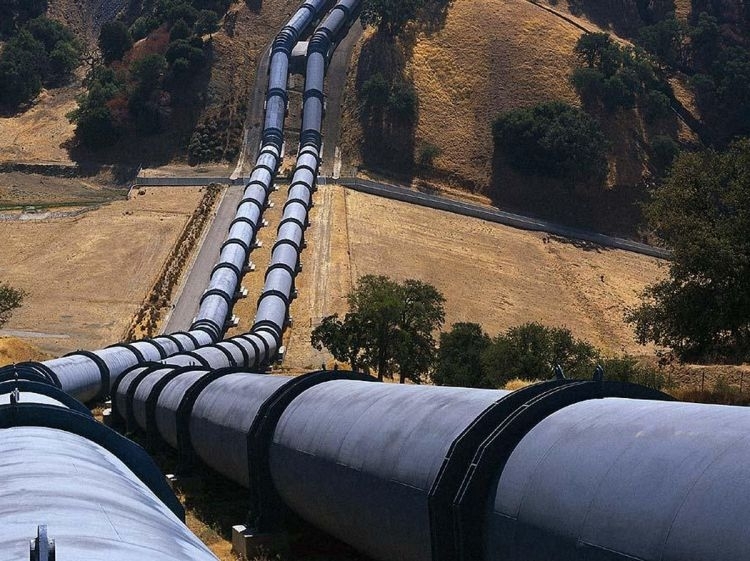
ANKARA: Energy and Natural Resources Minister Berat Albayrak announced the details of Turkey’s domestic energy and mining policy yesterday. As the minister disclosed a detailed map of Turkey’s energy strategy, focusing on the domestic resources, he underscored that by diversifying the energy supply, Turkey will decrease its dependence on energy resources through increasing investments in liquefied natural gas (LNG), Floating Storage and Regasification Units (FSRU), and by expanding the storage capacity of oil and natural gas storage. Explaining what the Turkish government intends to do with the national energy and mining strategy, Minister Albayrak said the new national energy and mining policy will be shaped by a strong economy and national security. Speaking at the introductory meeting of the “National Energy and Mine Policy” program, Minister Albayrak elaborated on a number of topics, such as natural gas, mining, oil, domestic electricity and domestic coal within the framework of the National Energy and Mine Policy, and said, “Our most untouched and open-ended field is mining.” Noting that the ministry decided to strengthen the LNG infrastructure due to information suggesting that the LNG share of the gas to be consumed in the world over the next 10 years is likely to surpass pipe gas, and therefore hit the button, Albayrak said that they will increase Turkey’s daily LNG capacity, which stood at 34 million cubic meters at the end of 2015, to 64 million at the end of the second year and up to 107 million cubic meters at the end of this year.
“Within two years, we will eliminate a very important infrastructural gap. The first [Floating LNG plant] of the FSRU infrastructure was commissioned in December in record time,” Albayrak said, suggesting that the second one will hopefully be implemented this year and that they will complete this process by commissioning the third in the Marmara Region, which is especially critical. Adding that with a seismic search vessel named Oruç Reis, which began operating this month, in addition to the already operational Barbaros Hayrettin vessels, as a country surrounded by the seas on three sides, the country will actively use the seas with one vessel in the Mediterranean and another in the Black Sea. With a new exploration drilling vessel to be purchased this year, Albayrak said that they will carry out drilling activities in the seas, two in the Black Sea and two in the Mediterranean Sea each year for the first time in history. “Everything is ready. The more you look, the more you will find. Now we will be much more active in sea drilling in our region as well,” Albayrak said. Pointing out that the government has important targets regarding oil storage, Albayrak said Turkey is not at its target level when it comes to oil storage, noting that their aim is to reach a storage capacity of 5 million tons. “With very swift geographical positioning, we will take this step so Turkey will not have internal problems in times of small crises.” Albayrak also noted that by increasing Turkey’s natural gas discharge capacity of 190 million cubic meters per day to 300 million cubic meters at the end of this year and later up to 400 million cubic meters, they are preparing the infrastructure to create an important supply capacity, not only for domestic market, but also for the region.