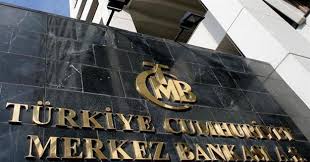
ISTANBUL: With less than one week to go before a referendum that could remodel Turkey’s political landscape, the central bank has pushed interest rates to the upper reaches of its monetary framework and depleted its policy tool of choice: Flexibility. As of last Tuesday, the bank’s average interest rate was 11.47%, near the mathematical limit of its current funding mix. That leaves the regulator almost maxed out should the lira come under renewed pressure before next Sunday’s vote, when Turks will decide whether to abolish the prime minister’s job and greatly expand the powers of President Recep Tayyip Erdogan. Meanwhile, two-week option contracts, which encompass a period that includes the April 16 referendum, show implied volatility on the lira surging to a two-month high of 17%. While the currency has appreciated in the past month as the central bank pulled rates up, the lira remains by far the worst performer among major emerging markets this year, with a loss of 4% against the dollar. “It looks like the bank has come to the limits of what it can do to tighten” until the next meeting of the Monetary Policy Committee on April 26, Ibrahim Aksoy, a strategist at HSBC Investment Management in Istanbul, said by e-mail. “We could be faced with a picture where the lira is among the biggest losers on days when perception on emerging markets deteriorates.”
Should the monetary authority need to drive rates higher before its next scheduled meeting on April 26, it would have to move beyond its preferred money market operations to a more extreme option: reducing funding through the overnight interbank market, the banks’ last remaining source of cheap cash. That limit was last reduced by half in January, when the central bank first started tightening via the most recent version of its unconventional framework. Such a move may not be necessary given the already elevated levels of Turkish rates, according to Paul McNamara, an investment director who oversees $4.5bn in emerging-market debt at GAM in London, said by e-mail on April 4. “I think it will take a lot to trigger a lira sell-off with liquidity this tight,” he said. Last week, the central bank offered no funding via the BIST overnight repo market at 9.25%, forcing lenders to rely on a limited supply of funding – 11bn liras ($3bn) – at the same rate on the interbank overnight market. That left the banks heading to the late liquidity window, where the rate is 11.75%, for the rest.


In Turkey’s unconventional framework, the distribution of lending across those rates yields the weighted average cost of funding. The 11bn liras banks can receive through the interbank overnight market each day accounts for roughly 10% of their daily funding needs, according to central bank data. “The central bank could take the additional step of cutting the 11bn-lira limit,” Aksoy said. But with inflation hitting a nearly nine-year high of 11.3% in March, “the possible effects of doing so would be limited.”
The bank has pushed funding costs up by more than 300 basis points this year through such daily liquidity management, a tightening that JPMorgan Chase & Co said on April3 had been enough to stabilise markets and restore some credibility, though “perhaps not as effective as a conventional 300 basis-point rate hike.” The bank has come under fire from investors for not raising rates quickly enough as markets priced in higher US rates and a stronger dollar on the back of pledges by President Donald Trump to ramp up spending. The lira fell to a record against the greenback in January and inflation accelerated past all estimates last month. The central bank has pledged to keep liquidity tight until there is a significant improvement in the outlook. US markets will be closed for Easter break on the Friday before Turkey’s vote, while European markets will be closed on Friday and the following Monday, which traders say could dry up liquidity and accentuate any price swings on the results.