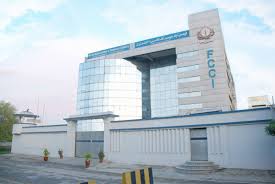
KARACHI: The Overseas Investors Chamber of Commerce and Industry (OICCI), in its budget proposal, has urged the Federal Board of Revenue (FBR) to slash highest tax slab on salaried individuals to 25 percent from existing 30 percent.
The OICCI, in its budget proposals for 2017-18, said that the increase in the upper tax slab rates of salaried persons by 50 percent, from 20 percent to 30 percent, in the Finance Act 2013-14, has negatively impacted professional managerial talent needed to grow the economy.


Therefore, the upper tax slab rate of salaried persons which is currently 30 percent should be reduced to 25 percent – either in one go or in phases of 1.25 percent annually over the next four years.
“Tax credit should be allowed for health insurance and medical expenditure against salary income for differently-abled individuals,” the OICCI said. It further recommended that there is a need to incorporate a mechanism that simultaneously encourages documentation and assists in bringing untaxed services sector into tax net.
This requires introduction of ‘tax credit’ against personal taxation on submission of evidences of expenses incurred on: Medical – Senior citizens to have a higher deduction limit for such expense; education of children.
Giving rationale it said, professionally educated and talented individuals will be motivated and brain drain issue will be addressed to a large extent.
The OICCI said that employer’s annual contributions to the employee’s provident fund is currently deemed to be income received by employee if it is in excess of one-tenth of the salary or PKR 150,000, whichever is lower, and is added to taxable income for determining tax liability of the employee.
Consequently, even though the amount added to the provident fund of the concerned employee will be payable to him only on retirement, he/she has to pay tax every year on this contribution, leading in theory to “pay tax now on what you will benefit years later”. Therefore, it recommended that threshold of Rs150,000 should be abolished or raised to Rs500,000 per annum.