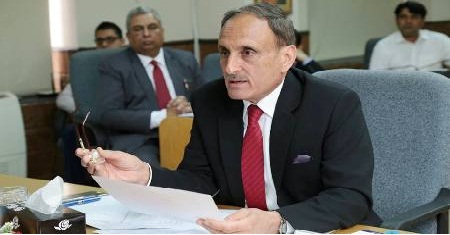
ISLAMABAD: Federal Board of Revenue (FBR) Chairman Dr Mohammad Irshad has said the federal government, under the second phase, has decided to increase property rates by 30 per cent and fresh valuation rates for major cities would be notified by June 30.
As a result of the increase in property valuation rates for federal tax purposes under the first phase, the government’s revenues from the sector increased 100 per cent to roughly Rs15 billion while property transactions also grew by one-tenth during the July-April period of the outgoing fiscal year.


According to a media report, the FBR chairman said that the government also plans to increase the number of cities included in the plan from 21 to approximately 30. The new rates will be notified after the approval of the Finance Bill 2017.
There was a plan to bring Larkana, Khairpur and Shaheed Benazirabad under the ambit of the new property valuation regime. At least two more cities will be included in the list and Okara could be one of them.
In August last year, the FBR had notified fresh property valuation rates for 21 major cities which provided a new base for the collection of withholding and capital gains tax. Withholding tax rates range from 1% to 3% while the CGT rates are in the range of 5% to 10%.
These rates were higher than the prevailing Deputy Collector rates but were still only 30% to 40% of actual market rates.
Now the plan is that the property valuation rates should jack up by another 25% to 30% on average over and above the previously increased rates. In cases, where the rates were earlier on the higher side, the increase could be 15% to 20%. However, there would also be cases where the FBR would lower the rates, mainly in Karachi and Faisalabad, said officials in the FBR.
The FBR had notified rates for major cities including Lahore, Multan, Gujranwala, Faisalabad, Sialkot, Islamabad, Karachi, Hyderabad, Sukkur, Sargodha, Mardan, Abbottabad, Peshawar, Quetta and Gwadar.
The authorities had picked these 21 cities for determining fresh, but slightly compromised, property valuation rates during its negotiations with the representatives of the real estate sector.
The government and the realty sector representatives had agreed to increase the rates, which are higher than Deputy Collector (DC) rates but far lower than the prevailing market rates.
These rates have provided the new base for collecting withholding taxes from the sellers and purchasers of the properties and the capital gains tax on profits made from these transactions. President Mamnoon Hussain promulgated the ordinance to give effect to the deal.
Most black money is parked in the real estate sector and authorities have long been trying to tap this area. However, due to various lacunas, collection always remained negligible compared with the transactions and returns on them.
From July through April of this fiscal year, the FBR collected Rs15 billion on sales and purchase of the properties which was 100% more than the previous year’s collection during this period. The figure is exclusive of capital gains tax collection, which will be known once individuals file their annual income tax returns likely by September this year.
Similarly, there was a 10.3% increase in property transactions, which stood at 212,800 till April this year – about 19,800 more than the previous year.
In order to maximise its revenue generation, the government has also proposed to expand the scope of the property valuation regime by bringing in those societies under its net which were earlier not covered. Now the FBR has proposed an amendment in section 236-C that deals with the entities responsible to collect taxes on sales of properties.