WASHINGTON: Ravi Karunanayake’s first foreign trip as Foreign Minister, not surprisingly to India, comes at a time when much is in the balance in Sri Lanka’s relations with key stakeholders in the development process. Sri Lanka’s decisions relating to ports and their development have suddenly become a high-stakes game of balancing the interests of foreign powers engaged in a race to advance their own strategic interests in the region, on the one hand, with Sri Lanka’s national interest, on the other.
After having put up a tough fight to safeguard Sri Lankan interests (and control) in negotiations with China over Hambantota port and related investments, former Ports Minister Arjuna Ranatunga, as Minister of Petroleum Resources now faces the challenge of handling another political hot potato, the Oil Tank Farm in Trincomalee, where India seeks to extend its grip with projects that will (reportedly) include “A Port, Petroleum Refinery and other industries.” Again he will be dealing with strategic assets where the outcome of negotiations will have far reaching consequences. Recent developments show that the Colombo Port too has now come into the mix.
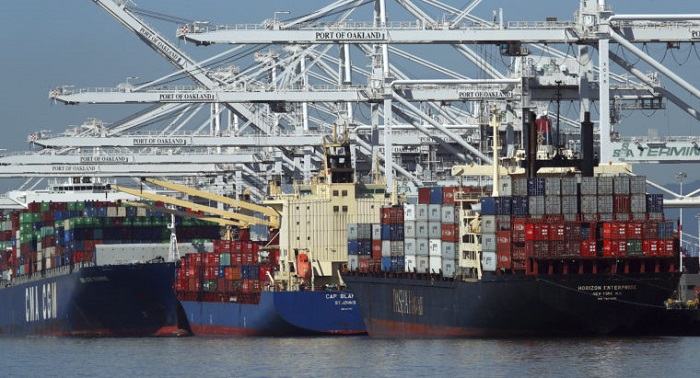

It may not have been immediately evident to the casual observer, but the Indian proposed“LNG Terminal / Floating Storage Regasification Unit (FSRU) in Kerawalapitiya/Colombo,” referred to in the MoU signed during Prime Minister Ranil Wickremesinghe’s trip to Delhi in April, will actually translate into India having a stake in the Colombo Port. This is because of the nature of Liquefied Natural Gas-related operations, which require special docking and storage facilities. LNG as a energy source is new in Sri Lanka, and requires infrastructure that is not available at this point. “LNG is natural gas that has been converted to liquid form for ease of storage or transport” according to Wikipedia. “It takes up about 1/600th the volume of natural gas in the gaseous state,” making it “cost efficient to transport over long distances where pipelines do not exist.” It is shipped in specially constructed vessels and once it reaches its destined market it is converted back into the gaseous state and distributed in pipelines. According to the Indian proposal, it would be used to fuel a (Indian-built) LNG-fired power plant in Kerawalapitiya, 12 km north of Colombo.