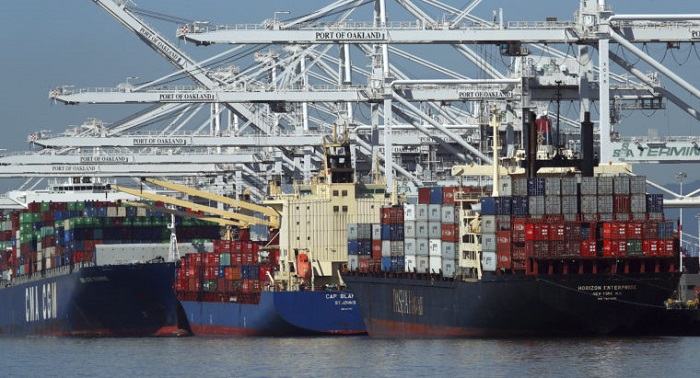
WASHINGTON: It should not be a surprise that the volume of inward and outward cargo via the Nigeria’s sea ports has reduced as reported the other day. It lends credence, to some extent, that some government policies in reality impact, hopefully, favourably or otherwise on the polity and economy. While what should always be of concern is the reasonableness of the intended objectives to be achieved by government policies, surprises should be when performance results are at significant negative variation with the set objectives. That the tonnage of goods that passed through the ports from 2014 to 2016 had declined is obviously a combination of both deliberate policies and gaps or weaknesses in the system. According to the report, inward cargo (that is, imported goods) which rose from the 2013 level of 78.2 million tonnes to 84.9 million tonnes in 2014 declined to 77.3 and 53.2 million tonnes in 2015 and 2016, respectively. In a similar manner, outward cargo (exported goods, excluding crude oil) which stood at 28.3 million tonnes in 2013 increased to 31.1 million in 2014 but thereafter declined to 29 and 26.9 million tonnes in 2015 and 2016, respectively.
These developments, according to the report, are signs of “an ailing economy where manufacturing and business struggle to survive”, pointing out that terminal operators at the ports “decried the negative impacts” as almost 80 per cent of the clearing agents have closed shop with attendant job loss” of almost 30,000 workers. The Seaports Terminal Operators Association of Nigeria (STOAN) had noted that most of the terminals were operating at half their capacities because of some anti-trade policies of the government such as imposition of 70 per cent tariff on imported vehicles, hike in import duty on rice and CBN’s barring of certain items from accessing official foreign exchange. It was also indicated that some importers pass their cargo through other countries’ ports to avoid high costs in Nigeria’s ports and to beat government policies through smuggling.