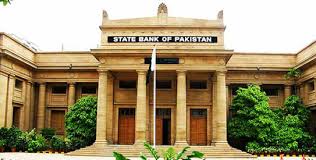
KARACHI: The central bank said on Friday the country’s macroeconomic indicators continue to improve, but a slowdown in exports and a drop in tax revenue will potentially undercut the pillar of recent economic strength.
It warned the policymakers that exports and revenue are among risks that could affect the economic stabilisation of the country. “Decline in exports and below target tax collection, are impacting two key macroeconomic balances –current account and fiscal,” said the State Bank of Pakistan (SBP) in its third quarterly report on the State of Pakistan’s Economy for the fiscal year 2016/17.


“In order to maintain the growth momentum and hard-earned economic stabilisation, these balances need to be kept at sustainable levels.” The central bank said the country’s exports have been afflicted by a number of structural, institutional and entrepreneurial gaps, which have constrained the country’s competitiveness for the last many years. “Pakistani exports could … benefit from this evolving dynamic, if the exporters are able to diversify their products at competitive prices,” the bank said.
The Annual Plan FY18 projects exports to grow by 6.8 percent, with impetus coming from removal of supply-side bottlenecks and a better performance by the industrial sector.
The import bill is likely to rise by 7.6 percent due to surge in demand for machinery and equipment. “However, the impact of such imports on the external balance would remain muted due to availability of financing from International financial institutions and other bilateral sources,” the central bank said. It sees lower tax collection is another challenge faced by the economy.
“Some tax measures, like differential tax structure for filers and non-filers can potentially increase the tax base; however, recent fiscal incentives for investment, exports and domestic production have led to deceleration in tax collection,” it added.
The FY18 budget has set a fiscal deficit target of 4.1 percent of GDP for the year. This will be supported by 14 percent growth (Rs 4 trillion) in the Federal Board of Revenue tax revenues. The bank said along with continuing some of the relief measures, the budget has also introduced a number of measures to achieve this enhanced revenue target.
“On the external front, the positive spillover of recovery in the global economy, particularly advanced economies, offers healthier trade prospects,” it added. The SBP mentioned that the decline in exports and worker remittances, which along with the increase in imports led to a higher current account deficit as compared to the last year.
The SBP said the country has adequate level of foreign exchange reserves, despite some decline, there are no immediate concerns over its external position. “However, going forward, it is imperative to exploit all sources of FX inflows –most importantly exports –in order to comfortably finance the rising import demand,” it added.
The central bank endorsed brighten economic outlook presented by the government for the fiscal year 2017/18 on the back of improvement in power supply and security situation. The government envisages a higher real gross domestic product growth of 6.0 percent for FY18, compared to 5.3 percent recorded in FY17.
The SBP said the growth prospects of Pakistan’s economy from FY18 onwards would largely hinge upon planned infrastructure projects and capacity expansion by industries. “In order to make these plans a success story, enhanced coordination amongst all public sector institutions would be more crucial. Also, continuity and consistency in policies, especially those related to investment and industry would be necessary to ensure sustainability of the growth momentum,” it added.
The SBP said inflation is expected to remain within the target of six percent amidst some pick up on the back of recovery in global prices of oil and other commodities, and push from domestic demand factors. It forecasted credit expansion to maintain its pace with better prospects for investment and business activities.
The growth in real GDP remained at its upward trajectory, and increased to a decade-high of 5.3 percent in FY17. Economic indicators like private sector credit and investment also posted encouraging picture, whereas inflation remained below the target.