
ATHENS: Greece is nowhere near to attain the characteristics of largest economies like China, Japan and Germany.
Yet the Greek-owned fleet of ships remains where it has been for a very long time, at the top of the global ranking of ship owning nations. It has been a remarkable story. But China is moving upwards rapidly, and potentially could overtake both Greece and Japan (the second largest) to become number one ship owner, perhaps within a few years.
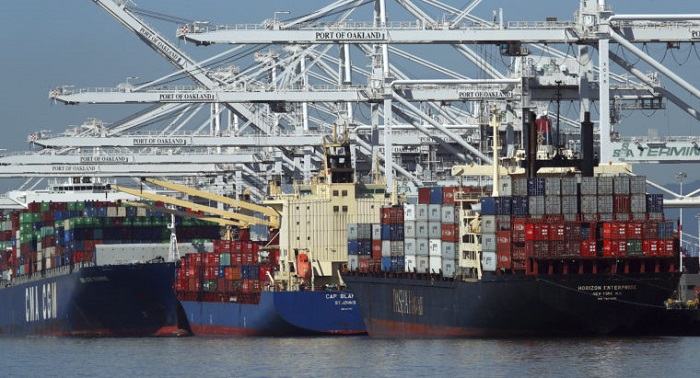

At first glance, these four countries are an odd group. They do not all have a similarly massive order of magnitude in the global picture of business and commerce. Japan, China and Germany are at the forefront of many rankings, such as the world’s largest economies, largest manufacturers, largest traders..
A new analysis reveals what has been happening. The latest edition of a report prepared annually by the United Nations Conference on Trade and Development, known as UNCTAD, entitled Review of Maritime Transport 2014 (RMT) was published a few weeks ago. It contains a wealth of valuable information and statistics about many aspects of world maritime activities. There are comprehensive and detailed chapters covering global seaborne trade, the world fleet of ships, freight rates and costs, ports, legal and regulatory developments, plus a special chapter for the current edition about maritime transport in small island developing states.
One particularly interesting aspect, because it is the primary reason for existence of a great proportion of the world fleet of ships, is seaborne trade. How has this trade been evolving? The Review shows that world seaborne trade in all cargoes decelerated in 2013, to 3.8 percent growth. Annual volume transported was almost 9,600 million tones. The increase was driven by additional dry cargo flows, growing at a 5.5 percent rate. Previously, in 2012, overall trade growth was almost one percentage point higher at 4.7 percent, so the slowdown last year was quite sharp.