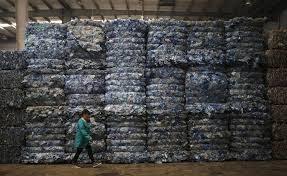
KUALA LUMPUR: When Seah Kian Hoe was just 10 years old, he would jump on the back of his parent’s small truck during school holidays and help them collect scrap, going door-to-door around neighbourhoods in the southern state of Johor. Taking their haul back to the family yard, they would spend hours separating the glass bottles, aluminium cans, discarded newspapers and metal. Seah now employs 350 people to help him run Heng Hiap Industries, one of Malaysia’s top five plastic recycling businesses which processes about 40,000 tonnes of waste per year from both domestic and overseas suppliers. Thirty five years ago, it was just scavenging a very different era compared to now,” Seah told the Thomson Reuters Foundation. I wanted to get into the recycling business and do it differently.”Heng Hiap Industries is just one of the Southeast Asian plastics recycling companies gearing up to benefit from China’s decision to ban imports of plastic waste from the start of 2018. Before the ban, which shocked many in the industry, China was the world’s dominant importer of such waste. In 2016, it imported 7.3 million tonnes of waste plastics, valued at US$3.7 billion, accounting for 56% of world imports. Over the past two decades, China was keen to suck in as much plastic waste as possible, helping feed its manufacturing expansion. But policy makers took action after a string of scandals involving unscrupulous players in the waste market.
Misdemeanours included stuffing containers with mixed or toxic rubbish rather than the specific types labelled for recycling, and illegal smuggling of waste that was simply dumped in landfill. reliminary data from BIR, shared with the Thomson Reuters Foundation, showed imports of plastic waste into Southeast Asia are already rising fast.


Due partly to a ramp up in shipments in the final quarter of last year, BIR estimates that annual imports of plastic scrap into Malaysia jumped to 450,000-500,000 tonnes in 2017 from 288,000 tonnes in 2016.
To avoid this, industry officials urged Southeast Asian nations to tighten health and safety regulations, so that they can properly monitor what plastics enter their countries, and stop illegal practices. Greenpeace East Asia plastics campaigner Liu Hua wants to see companies use less plastic packaging in the longer term, but for now, Southeast Asian governments should strengthen environmental controls to limit the spread of hazardous chemical waste and any negative impact on human health, he said. Steve Wong, executive president of the China Scrap Plastics Association, called for stronger controls on imports, licence issuance and environmental inspections of factories.
To date, the world has produced more than 8 billion tonnes of plastic, said Borad at BIR. Only 9% has been recycled, while just under 80% has been treated as waste sent to landfill sites or dumped in the oceans. As awareness rises over the dangers of allowing plastic waste to end up in the sea where it poisons fish and can enter the human food chain, recycling capacity will need to grow considerably worldwide. In Malaysia, Seah remembers how his parents were once ashamed they made a living from collecting and reusing scrap, believing it to be a profession that was not respected. But when his recycling company received an international award for environmental leadership in 2013, it helped change their minds. Southeast Asian nations now face a similar battle to shift perceptions of the recycling industry. Plastic China”, an award-winning documentary released in late 2016, ignited further public outrage by highlighting the human and environmental costs of the under-regulated, Wild West-style recycling industry.