Customs Today
  • Home
  • Islamabad
  • Karachi
  • Lahore
  • National
  • Transfers and Postings
  • Chambers & Associations
  • Business
No Result
View All Result
Customs Today
  • Home
  • Islamabad
  • Karachi
  • Lahore
  • National
  • Transfers and Postings
  • Chambers & Associations
  • Business
No Result
View All Result
Customs Today
No Result
View All Result
Home Business
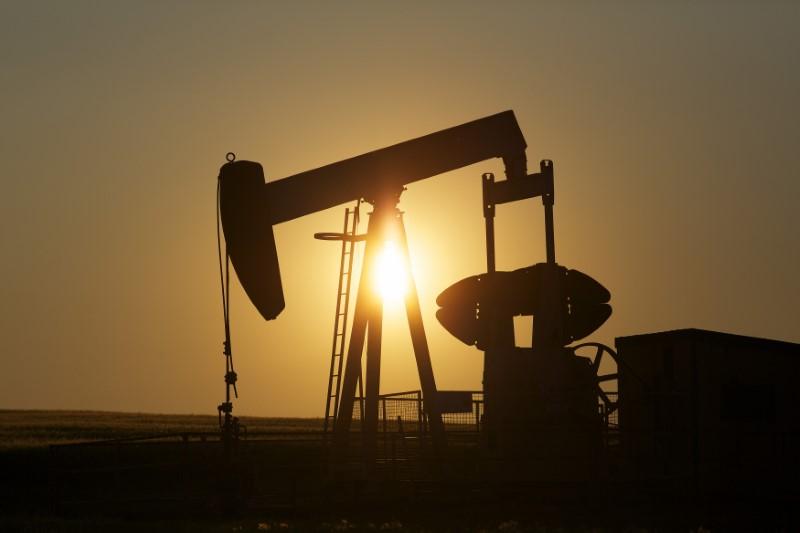
An oil pump jack pumps oil in a field near Calgary, Alberta, July 21, 2014. REUTERS/Todd Korol

An oil pump jack pumps oil in a field near Calgary, Alberta, July 21, 2014. REUTERS/Todd Korol

Rising oil prices: Pakistan’s economy likely to face tougher challenges in 1H

byCT Report
06/02/2018
in Business
Share on FacebookShare on Twitter

KARACHI: Pakistan’s economy will most likely be faced with tougher challenges in the second half of the current fiscal year as it remains heavily dependent on imported fuel oil whose prices are steadily on the rise.

Oil prices rose 50% to the three-year high of $68.5 per barrel on Monday and were expected to increase to around $80 in the next six months.


You might also like

Barrister Danyal invites women entrepreneurs to contribute as parliamentarians

22/10/2026

Punjab unveils Rs300b financing programme for businesses

21/10/2026

“Good days seem to be over… second half’s (January-June 2018) import bill will be significantly higher than the first half (of current fiscal year 2017-18),” BMA Capital economist Fawad Khan said.

The State Bank of Pakistan (SBP) and JP Morgan, a renowned international investment bank, recently anticipated that the price of international oil benchmark (Brent crude oil) would reach $70 per barrel in the next six months.

Goldman Sachs, however, last week revised up its forecast to $75 per barrel in three months and $82.5 in the next six months.

The continuous surge in oil prices in world markets due to pick-up in demand and weakening of the US dollar against major world currencies under the global currency war has forced authorities in Pakistan to pass on the burden to the consumers.

This is expected to have a domino effect on the entire economy by inducing cost-push inflation. It would also make transportation of commodities and their prices expensive, fuel inflationary pressure and prompt the SBP to further increase the benchmark interest rate, which it enhanced 25 basis points two weeks ago to 6%.

Simultaneously, the uptick in international oil prices and the country’s surging import bill would also widen the current account deficit and press authorities to take additional measures to bolster exports and inward remittances and cut imports.

Related Stories

Barrister Danyal invites women entrepreneurs to contribute as parliamentarians

byCT Report
22/10/2026

RAWALPINDI: Federal Parliamentary Secretary for Information and Broadcasting, Barrister Danyal Chaudhry on Wednesday formally inaugurated the The Rawalpindi Chamber of...

Punjab unveils Rs300b financing programme for businesses

byCT Report
21/10/2026

LAHORE: Punjab Minister for Industries and Commerce Chaudhry Shafay Hussain has announced a Rs300 billion programme this year, under which...

Punjab govt to ban sale, purchase and use of spying devices equipped with hidden cameras

byCT Report
20/10/2026

LAHORE: The Punjab government has decided to ban the use, purchase and sale of spying devices, including glasses, pens, watches...

Pakistan’s rice exports cross 1 million tonnes in first three months of FY27

byCT Report
19/10/2026

ISLAMABAD: Pakistan exported 420,277 metric tonnes of rice in September 2026, compared with 168,322 metric tonnes in September 2025. Rafiq...

Next Post

Industrialists oppose Rs25,000 per-month minimum wage

  • Terms and Conditions
  • Disclaimer

© 2011 Customs Today -World's first newspaper on customs. Customs Today.

No Result
View All Result
  • Transfers and Postings
  • Latest News
  • Karachi
  • Islamabad
  • Lahore
  • National
  • Chambers & Associations
  • Business
  • About Us

© 2011 Customs Today -World's first newspaper on customs. Customs Today.