
TOKYO: Japanese Prime Minister Shinzo Abe’s policy actually raises the bar for companies to get tax breaks to 3% wage increases from 2% and as a result it will likely fail to drive up compensation.
Most businesses are simply unwilling to hike wages that much, wary of committing to driving up ongoing costs for a temporary, three-year tax break.
Even officials at the Ministry of Finance are sceptical.
It only expects one fifth of large profitable companies will take advantage of the offer, which slashes the official corporate tax rate from 30% to 25%, a ministry official told Reuters.
He declined to be identified because he is not authorised to talk to the press.
Under the new scheme, the finance ministry estimates it will lose ¥161bn ($1.51bn) in corporate tax revenue in the fiscal year ending March 31, 2019, down sharply from ¥318bn in tax breaks handed out in the year ended in March 2017, which is the most recent data available.
One problem is that many companies already pay far less than a 30% tax rate due to various deductions.
The average effective tax rate for Japan’s largest companies is only around 10%, while smaller firms paid an average of around 19%, in the fiscal year ended March 2013, according to research by Yukio Tomioka, a professor at Chuo University.
Last year, companies hiked wages by 2.1%, and economists predict a similar raise this year in annual wage negotiations with labour unions that will end in March.
The wage hike tussle comes amid a sustained recovery in Japan, which has just posted its longest continuous expansion since the 1980s boom.
But shaking two decades of deflation has been hard.
Abe dangled the tax break offer in an attempt to lure companies into a hefty wage hike as a way to spur consumer spending and lift price rises towards the central bank’s 2% target. Some big companies have expressed support for Abe’s 3% mantra, but as the decision looms, economists predict that the average hike will fall short of that mark.
Disappointing wage negotiations could undermine Japan’s recovery and curb speculation that the Bank of Japan will scale back its massive asset-buying campaign.
“The macroeconomic impact (of the tax cuts) will likely be small,” said Shungo Koreeda, a researcher at Daiwa Institute of Research.
Abe’s new tax break bill which is certain to pass into law by April given the ruling coalition’s control of parliament – is actually a revision of one that’s been in place since the year that started in April 2013. Under the existing plan, large companies that raise wages by 2% can get around a 1 percentage point tax break.
But raising the bar to 3% is too much for many companies, even with the higher incentive of a maximum 5 percentage-point reduction in the tax rate.
The new scheme’s temporary nature deters companies who rely on long-term planning for investment and other major strategic decisions. “There is a fundamental mismatch, because the tax break is temporary but a wage increase is close to permanent,” said Takuya Hoshino, economist at Dai-Ichi Life Research Institute.”A company cannot recoup what it loses by raising wages with this tax code.”
Smaller companies with less than ¥100mn in capital can get a similar tax break if they raise wages by 1.5% or more.
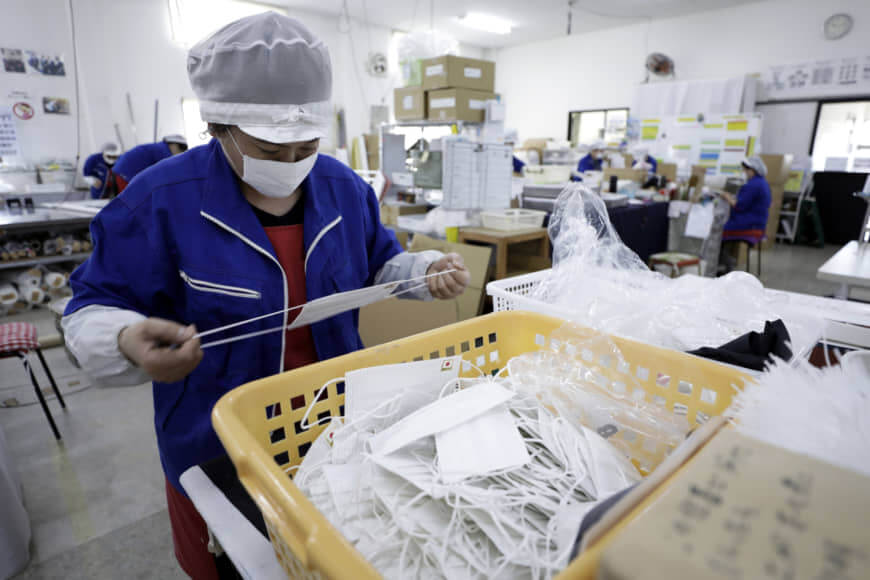
Japan mask prices surge on online flea markets amid coronavirus scare
OSAKA – As the shortage of face masks continues in Japan amid the spread of a new coronavirus originating in...