

Customs Today
  • Home
  • Islamabad
  • Karachi
  • Lahore
  • National
  • Transfers and Postings
  • Chambers & Associations
  • Business
No Result
View All Result
Customs Today
  • Home
  • Islamabad
  • Karachi
  • Lahore
  • National
  • Transfers and Postings
  • Chambers & Associations
  • Business
No Result
View All Result
Customs Today
No Result
View All Result
Home Science & Technology Science

NASA’s Kepler finds new planet 180 light years away in constellation of Pisces

byMonitoring Report
20/12/2014
in Science, Science & Technology
Share on FacebookShare on Twitter

You might also like

Tesla driverless system to use updated radar technology

12/09/2016

Apple to develop its own self-driving technology

10/09/2016

AFRICA: Kepler space telescope may be damaged goods, but smart copy created by NASA’s engineers have kept it going and it has spotted a new look– if distant – planet that could harbor water, just like Earth.
“Like a phoenix rising from the ashes, Kepler has been reborn and is continuing to make discoveries. Even better, the planet it found is ripe for follow-up studies,” said lead author Andrew Vanderburg of the Harvard-Smithsonian Center for Astrophysics (CfA).
In May of 2013, NASA reported that two of the four spinning reaction wheels used to orient the telescope had conked out, leaving Earth-bound controllers unable to point the instrument accurately.
But NASA engineers later managed to stabilize the telescope by using the power of the Sun to augment the reaction wheels. The team used the pressure of particles streaming out from the Sun as a “third wheel” to augment the remaining hardware and were able to orient the telescope accurately and keep it looking for distant planets.
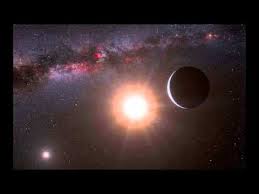
The first test of the system took place in February and was successful. In that observation run, Kepler spotted another planet, dubbed HIP 116454b, orbiting a type K orange dwarf star that was 180 light years away in the constellation of Pisces. The planet is around two and a half times the size of Earth, but with a mass 12 times greater than our terrestrial home.
Data from the telescope shows the planet orbits its sun every 9.1 days at a distance of 8.4 million miles away. Density readings show that the planet is either very similar to our own (comprising around three-fourths water and one-fourth rock) or a gas giant with an extended atmosphere, like Jupiter.
“HIP 116454b will be a top target for telescopes on the ground and in space,” said Harvard astronomer and co-author John Johnson of the CfA.

Tags: 180 light years awayauthor Andrew Vanderburg of the Harvard-Smithsonian Center for AstrophysicsNASA's engineersNASA's Kepler finds Space telescope spots

Related Stories

Tesla driverless system to use updated radar technology

byCT Report
12/09/2016

WASHINGTON: Electric carmaker Tesla announced Sunday it was upgrading its Autopilot software to use more advanced radar technology. In a...

Apple to develop its own self-driving technology

byCT Report
10/09/2016

SAN FRANCISCO: Apple may not become an automaker, but it still wants to develop its own self-driving technology. The iPhone-maker's...

NASA spots slowest known magnetar

byCT Report
10/09/2016

WASHINGTON: Astronomers have found evidence of a magnetar - magnetised neutron star - that spins much slower than the slowest...

‘YouTubers’ outshining old-school television

byCT Report
09/08/2016

SAN FRANCISCO: A media revolution is taking place, and most people over 35 years of age aren’t tuned in. Millennial...

Next Post

FBR seizes record of 21 TMAs, 18 Registration Branches to check WHT collection

  • Terms and Conditions
  • Disclaimer

© 2011 Customs Today -World's first newspaper on customs. Customs Today.

No Result
View All Result
  • Transfers and Postings
  • Latest News
  • Karachi
  • Islamabad
  • Lahore
  • National
  • Chambers & Associations
  • Business
  • About Us

© 2011 Customs Today -World's first newspaper on customs. Customs Today.