
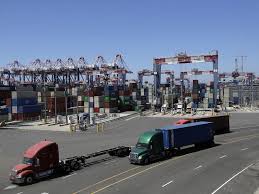
Ports and ground terminals in nearly every state handle goods that are now or will likely soon be covered by import tariffs. Port executives worry that this could mean a slowdown in shipping that would have ripple effects on truckers and others whose jobs depend on trade.
The Associated Press analyzed government data and found that from the West Coast to the Great Lakes and the Gulf of Mexico, at least 10 percent of imports at many ports could face new tariffs if President Donald Trump’s proposals take full effect.
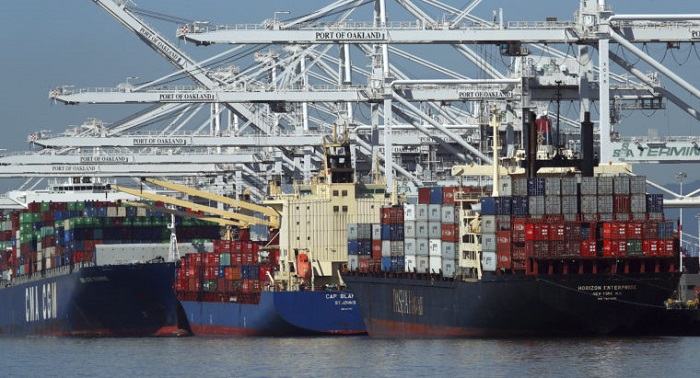

Since March, the U.S. has applied new tariffs of up to 25 percent on nearly $85 billion worth of steel and aluminum and various Chinese products, mostly goods used in manufacturing.
For the Savannah ports, the AP data shows the value of all imports for 2017 was $64.2 billion.
Tariffs vary depending on the product. The percentage of the value of the specific imports that are impacted ranges from less than one percent to 87 percent on iron and steel imports, according to the AP data. The percentage for the value of aluminum subject to tariffs is 75 percent.
Savannah imported $1.7 billion in iron and steel products in 2017. Aluminum and aluminum product imports locally reached $1 billion in 2017.
Trump said in a recent tweet, “Tariffs are working big time.” He has argued that the tariffs will help protect American workers and force U.S. trading partners to change rules that the president insists are unfair to the United States.
In New Orleans, port officials say a tariff-related drop in shipments is real, not merely a forecast. Steel imports there have declined more than 25 percent from a year ago, according to the port’s chief commercial officer, Robert Landry.
The port is scouting for other commodities it can import. But expectations appear to be low.
“In our business, steel is the ideal commodity,” Landry said. “It’s big, it’s heavy, we charge by the ton so it pays well. You never find anything that pays as well as steel does.”
The port of Milwaukee imports steel from Europe and ships out agricultural products from the Midwest. Steel imports haven’t dropped yet because they are under long-term contracts, said the port director, Adam Schlicht. But there has been “an almost immediate halt” in outbound shipments of corn because of retaliatory duties imposed by the European Union on American products.
Much of the corn, he said, “is just staying in silos. They are filled to the brim.”
Most other ports have been humming along and even enjoyed an unexpected bump in imports during June and July as U.S. businesses moved up orders to ship before the new tariffs took effect. That started with manufacturing goods and is now spreading to retail items for back-to-school and Christmas.
“Some of my retail customers are forward-shipping the best they can to offset proposed tariffs,” says Peter Schneider, executive vice president of T.G.S. Transportation, a trucking company in Fresno, California.
Port officials were encouraged by this week’s announcement that the United States and Mexico had reached a preliminary agreement to replace the North American Free Trade Agreement, hoping it might lead to reduced trade barriers. Canada’s participation in any new deal to replace NAFTA, though, remains a major question mark.
The port officials continue to worry, though, that Trump will make good on a plan to expand tariffs to an additional $200 billion in Chinese imports — a list that includes fish and other foods, furniture, carpets, tires, rain jackets and hundreds of additional items. Tariffs would make those items costlier in the United States. And if Americans buy fewer of those goods, it would likely lead to fewer container ships steaming into U.S. ports.
