Customs Today
  • Home
  • Islamabad
  • Karachi
  • Lahore
  • National
  • Transfers and Postings
  • Chambers & Associations
  • Business
No Result
View All Result
Customs Today
  • Home
  • Islamabad
  • Karachi
  • Lahore
  • National
  • Transfers and Postings
  • Chambers & Associations
  • Business
No Result
View All Result
Customs Today
No Result
View All Result

IMF predicts Swiss growth to slow to 1.1% in 2019

byCT Report
02/04/2019
in Uncategorized
Share on FacebookShare on Twitter

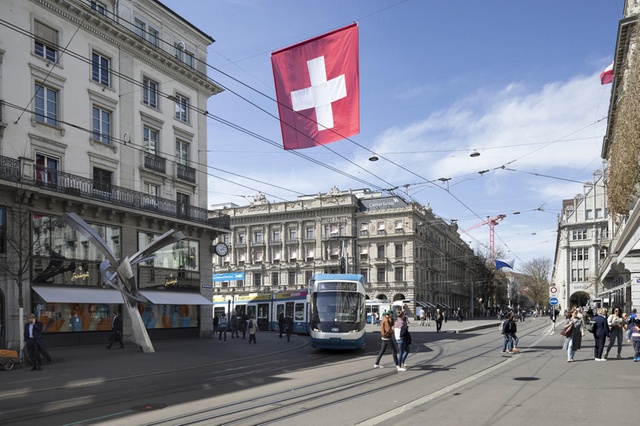
The Swiss economy is likely to slow in 2019, with gross domestic product growth expected to hit 1.1%, followed by a “moderate” recovery in 2020, the International Monetary Fund said on Monday.

The IMF said in a concluding statement, published on Monday following a mission to Switzerland and an annual evaluationexternal link, that a “sustained regional slowdown, intensification of global trade tensions and a disruptive Brexit” would adversely affect the Swiss economy.


You might also like

FBR lodges FIR against gold jewelers in Lahore amid tax monitoring dispute

29/04/2026

FBR clarifies tax relief for builders under special regime

29/04/2026

Other factors that are expected to impact growth include weak external demand, subdued domestic demand and the absence of biennial international sporting events. Inflation is expected to remain just below 1% this year.

The IMF growth figure is slightly lower than the latest Swiss National Bank (SNB) forecast from a few days ago (1.5%), while the State Secretariat for Economic Affairs (SECO) also predicted 1.1% growth for 2019. In 2018, GDP growth stood at 2.5%.

National risks
Rachel van Elkan, head of the IMF mission to Switzerland, told reporters in Bern on Monday that in general Swiss monetary policy had helped mitigate the effects of the strong franc and stabilise inflation. Public finances were strong, but more government investment could help support the economy, van Elkan noted.

At the national level, the IMF sees risks in Swiss real estate and in mortgage loans, where 85% of banks’ assets are concentrated. Pension funds and insurance companies are also highly exposed, it added.

The IMF also noted that uncertainties over corporate taxation and old-age pensions could increase volatility for business operations.

In their assessment, the IMF also recommended the Swiss authorities beef up the role of the Swiss Financial Market Supervisory Authority (FINMA) and increase the number of staff. It said the financial watchdog should be able to carry out more on-the-spot checks, especially on the largest banks.

Related Stories

FBR lodges FIR against gold jewelers in Lahore amid tax monitoring dispute

byCT Report
29/04/2026

LAHORE: The Federal Board of Revenue (FBR) has lodged a First Information Report (FIR) against gold jewelers in Lahore after...

FBR clarifies tax relief for builders under special regime

byCT Report
29/04/2026

ISLAMABAD: The Federal Board of Revenue (FBR) has issued a fresh clarification to ease tax compliance for builders and developers...

Pakistan targets Rs350b new tax measures in FY2026–27 budget

byCT Report
29/04/2026

ISLAMABAD: Pakistan is gearing up to introduce wide-ranging tax reforms and withdraw key exemptions to generate nearly Rs350 billion in...

Pakistan, Tajikistan agree to advance trade, transit cooperation, explore new corridor mechanisms

byCT Report
29/04/2026

ISLAMABAD: Federal Minister for Commerce Jam Kamal Khan held a meeting with Tajikistan Ambassador, Sharifzoda Yusuf Toir to discuss measures...

Next Post

Lack of USMCA ratification a nail biter for Canadian businesses

  • Terms and Conditions
  • Disclaimer

© 2011 Customs Today -World's first newspaper on customs. Customs Today.

No Result
View All Result
  • Transfers and Postings
  • Latest News
  • Karachi
  • Islamabad
  • Lahore
  • National
  • Chambers & Associations
  • Business
  • About Us

© 2011 Customs Today -World's first newspaper on customs. Customs Today.