Customs Today
  • Home
  • Islamabad
  • Karachi
  • Lahore
  • National
  • Transfers and Postings
  • Chambers & Associations
  • Business
No Result
View All Result
Customs Today
  • Home
  • Islamabad
  • Karachi
  • Lahore
  • National
  • Transfers and Postings
  • Chambers & Associations
  • Business
No Result
View All Result
Customs Today
No Result
View All Result
Home International Customs South Africa

Government to ban foreign business from ‘certain sectors’

byadmin
23/09/2019
in South Africa
Share on FacebookShare on Twitter

The government is developing legislation that will bar foreign nationals from operating in certain sectors of the economy, a key member of President Cyril Ramaphosa’s cabinet revealed this week.
Justice and Correctional Services Minister Ronald Lamola told a fundraising gala dinner hosted by the Kgalema Motlanthe Foundation on Thursday night that his small business development counterpart, Khumbudzo Ntshavheni, was developing legislation in relation to foreign nationals doing business in South Africa.

“(The minister) is also developing legislation in relation to foreign nationals doing business in our country – which sectors of the economy can they play in and where and how? That is the kind of legislation she is busy with and we are hoping that soon it will be released for public engagement,” Lamola said.


You might also like

lamic banking assets reach Rs14.47 trillion, sector share rises to 23%

07/03/2026
Toyota Motor Corp. employees work on the Crown vehicle production line at the company's Motomachi plant in Toyota City, Aichi, Japan, on Thursday, July 26, 2018. Toyota may stop importing some models into the U.S. if President Donald Trump raises vehicle tariffs, while other cars and trucks in showrooms will get more expensive, according to the automaker’s North American chief. Photographer: Shiho Fukada/Bloomberg

Toyota SA to invest over R4 billion in car assembly and parts

05/02/2020

He said the reality was that foreign nationals were needed in certain sectors of the economy for it to grow.

“The legislation will also have to cover and be realistic to such kind of dynamics because we are not going to wake up and have a massive deportation of Zimbabweans, Mozambicans and Lesotho nationals,” Lamola said.

“We need to put in place legislation that will be able to set aside and strike a clear balance that will help us to still grow the economy for the benefit of everyone in South Africa, but still be able to say there are sectors that we need to regulate and be clearly stated that no foreign national can run this kind of a business”.

Lamola denied this was protectionism. “Because South Africa is the most industrialised economy on the continent, we are going to be the biggest beneficiaries of the Africa Free Trade Agreement. We don’t have the luxury of closing our borders altogether.”

Lamola also spoke of the challenges he had been battling since his appointment. “What we are grappling with is that those who have looted the state did not just loot money for the building of houses, at Eskom or anywhere. They have also looted the money that is supposed to prosecute them,” he said.

Lamola said the National Prosecuting Authority (NPA) had a vacancy rate of 20% and hadn’t been recruiting for the past five years.

“Everyone is now crying, asking why the NPA is not prosecuting people who have looted money (when) there is evidence all over. The skills have been hounded out of the NPA.”

Lamola said this was why the NPA had to rebuild itself and get the necessary skills, but promised that his department was helping it and providing the necessary support.

He said the sophisticated crimes committed by people who looted the state required skilled prosecutors and that director-general Vusi Madonsela was working very hard with the National Treasury so that the NPA could recruit people who could help with prosecuting sophisticated crimes.

Related Stories

lamic banking assets reach Rs14.47 trillion, sector share rises to 23%

byCT Report
07/03/2026

KARACHI: Pakistan’s Islamic banking sector expanded during 2025, increasing its share in the country’s financial system with assets reaching nearly...

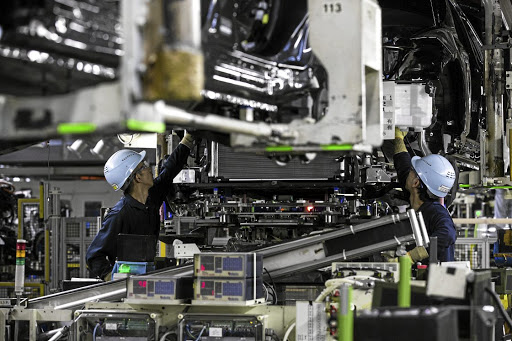
Toyota Motor Corp. employees work on the Crown vehicle production line at the company's Motomachi plant in Toyota City, Aichi, Japan, on Thursday, July 26, 2018. Toyota may stop importing some models into the U.S. if President Donald Trump raises vehicle tariffs, while other cars and trucks in showrooms will get more expensive, according to the automaker’s North American chief. Photographer: Shiho Fukada/Bloomberg

Toyota SA to invest over R4 billion in car assembly and parts

byadmin
05/02/2020

Toyota SA Motors (TSAM) has announced a R4.28bn investment in local vehicle assembly and parts supply. Speaking at the company’s...

Toyota Motor Corp. employees work on the Crown vehicle production line at the company's Motomachi plant in Toyota City, Aichi, Japan, on Thursday, July 26, 2018. Toyota may stop importing some models into the U.S. if President Donald Trump raises vehicle tariffs, while other cars and trucks in showrooms will get more expensive, according to the automaker’s North American chief. Photographer: Shiho Fukada/Bloomberg

Toyota SA to invest over R4 billion in car assembly and parts

byadmin
03/02/2020

Toyota SA Motors (TSAM) has announced a R4.28bn investment in local vehicle assembly and parts supply. Speaking at the company’s...

Massmart warns of almost R1.4bn loss as SA consumers struggle

byadmin
30/01/2020

Walmart-owned retailer Massmart, whose brands include Makro and Game, warned on Thursday it had swung into a loss in its...

Next Post

Thai business community urges more action against fake goods

  • Terms and Conditions
  • Disclaimer

© 2011 Customs Today -World's first newspaper on customs. Customs Today.

No Result
View All Result
  • Transfers and Postings
  • Latest News
  • Karachi
  • Islamabad
  • Lahore
  • National
  • Chambers & Associations
  • Business
  • About Us

© 2011 Customs Today -World's first newspaper on customs. Customs Today.