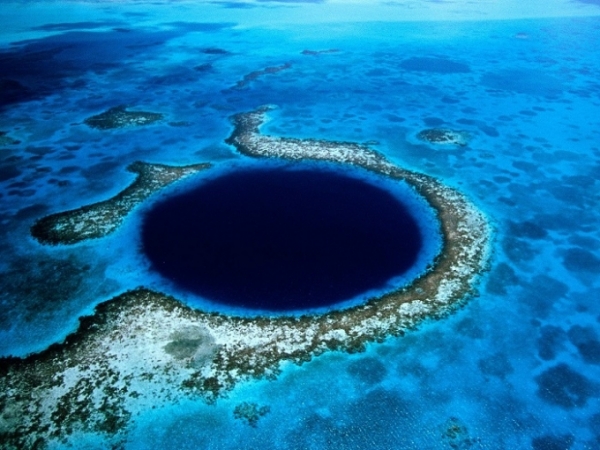


LONDON: According to the new research the ancient Maya civilization demolished due to a century-long drought. Raw materials taken from Belize’s famed underwater cave, known as the Blue Hole, as well as lagoons nearby, show that a great dearth occurred between the year 800 and 900, right when the Maya civilization disintegrated.
After the rains returned, the Maya moved north — but they disappeared again a few centuries later, and that disappearance occurred at the same time as another dry spell, the sediments reveal.
Although the findings aren’t the first to tie a drought to the Maya culture’s demise, the new results strengthen the case that dry periods were indeed the culprit. That’s because the data come from several spots in a region central to the Maya heartland, said study co-author André Droxler, an Earth scientist at Rice University.
The Maya civilization flourished in the Yucatan peninsula from 300 to 700. These ancient Mesoamericans built stunning pyramids, mastered astronomy, and developed both a hieroglyphic writing system and a complex calendar system. The Maya calendar became famous in recent years when some doomsayers wrongly claimed that it predicted the end of the world in 2012.
After the year 700, the Maya culture’s building activities slowed, and the communities descended into warfare and anarchy. Historians have speculatively linked that decline with everything from the ancient society’s fear of malevolent spirits, to deforestation completed to make way for cropland, to the loss of favored foods such as the Tikal deer. But since at least 1995, scientists have been focusing on the effects of drought.

Karachi Port sets 138-year cargo handling record
KARACHI: Pakistan's maritime sector has achieved a major milestone as Karachi Port set a new record in its 138-year history...