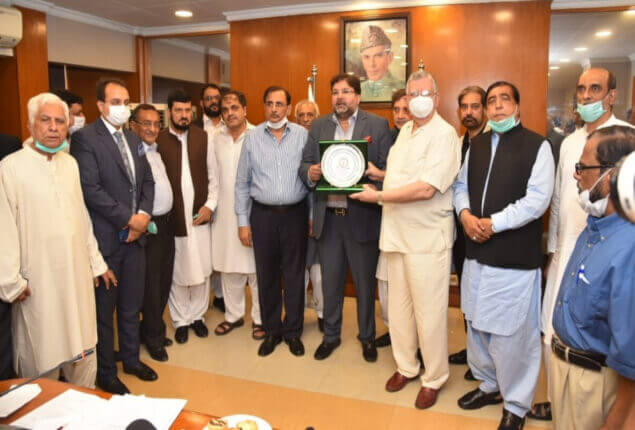
KARACHI: The high-powered Reforms and Resource Mobilisation Commission (RRMC) of the government has approached the Federation of Pakistan Chambers of Commerce and Industry (FPCCI) for the proposals on taxation reforms; mobilising and saving national resources and the Federal Budget for 2023/24, Irfan Iqbal Sheikh, president of the FPCCI, said.
RRMC has a full-fledged secretariat at the FBR head office and is headed by the world-renowned chartered accountant, Ashfaq Tola.
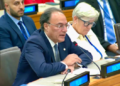

Sheikh said that to make any revenue reforms to succeed, those should be based on three basic yet far-reaching guiding principles, i.e., simplification of the taxation system; broadening the tax base and accountability of the tax collection machinery.
The FPCCI president or his nominee has been made a part of RRMC, as well.
The time has come that all the state-owned enterprises (SOEs), in general, and the loss-making SOEs, in particular, should be privatised; as their combined annual losses have reached Rs5 trillion, he added.
Doing business is none of the government’s business and no economy can withstand that much losses, compared with their GDP; let alone a struggling country like Pakistan, Sheikh remarked.
Suleman Chawla, senior vice president (SVP) of the FPCCI, said that the biggest issue with meaningful participation in the budget-making exercise is that most of the recommendations and proposals forwarded to the federal government, through the FPCCI platform, are not given due consideration; which in turn, discourages the business, industry and trade community — as the FPCCI is their apex body.
For Chawla, there is a string sentiment in the business community that the taxation policies are not made based on the hard facts or ground realities of Pakistan but rather, based on the dictates of the international lending agencies, such as the International Monetary Fund (IMF), World Bank, the Asian Development Bank, etc.
A big question arises here that how the policies having a big disconnect with the national economy can result in business, commercial, trade or economic development of the country? He asked.
Shaukat Omerson, vice president (VP) of the FPCCI, demanded that the taxation system should be simplified, specifically for the Small and Medium Enterprises (SMEs), as they do not have the resources to hire top consultants or lawyers in case of any disputes or anomalies.
He also called for the rectification of the imbalance between direct and indirect taxes to make the country’s taxation system fair, transparent and easy-to-comply with.
shfaq Tola, chairman of the Reforms and Resource Mobilisation Commission, said that he is aware of the difficulties being faced by the business community, as he has decades-long experience as a businessman himself.
He proposed that the FPCCI should send a unified budget proposal for the Federal Budget 2023/24; encompassing recommendations of all the 250 chambers, trade bodies and associations; as this exercise will eliminate the contradictions within the business community in their respective proposals.
According to Tola, the government is aiming at setting a revenue collection target of approximately Rs9 trillion for FY24. However, almost 60 per cent of the total revenue collection goes to provinces; and, in FY23, the total collection will be approximately Rs7.5 trillion.
“Additionally, most of the resources go towards debt servicing and very little is left for the developmental expenditures. We need to get out of the debt trap through reforms and resource mobilisation,” he added.