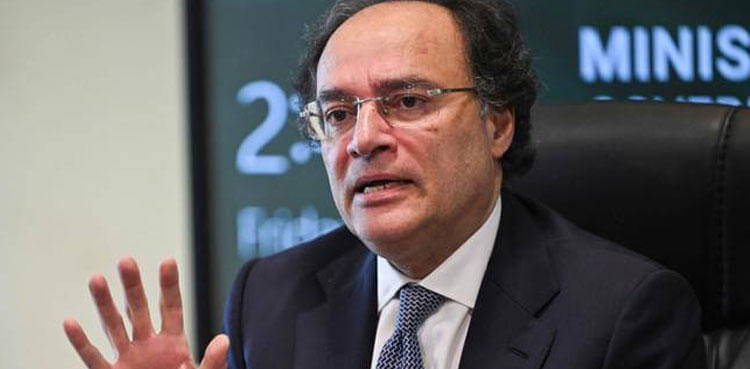
ISLAMABAD: Finance Minister Muhammad Aurangzeb has urged that population size and human development indicators should become key criteria in how financial resources are shared between the federal government and provinces under the National Finance Commission (NFC) Award. He stressed the need to shift focus from traditional economic metrics to long-term, sustainable development.
Speaking at a World Population Day event in Islamabad, he backed the health and planning ministers’ proposal to revise the NFC’s existing formula-based model. The minister emphasized that if Pakistan wants to reach its goal of becoming a $3 trillion economy by 2047, it must urgently address population growth and climate change, calling them the country’s “two existential issues.”


Aurangzeb pointed out that Pakistan’s population growth rate of 2.55% is among the highest in the region. He warned that 40% of children under five suffer from stunted growth, and a large portion of women remain excluded from formal education and the labor force. “If women don’t become a productive part of the workforce, Pakistan can’t progress in a sustainable way,” he said.
He called for “end-to-end” solutions to tackle health and education challenges-such as malnutrition, poor sanitation, lack of clean water, and family planning awareness. He also urged international donors to invest more in education, health, and population planning rather than just physical infrastructure. “We need a paradigm shift in how development spending is planned and executed,” he stated.
Aurangzeb cited the current development budget of Rs5.2 trillion (including federal and provincial levels), and said the issue lies in coordination and prioritization, not just funding. He referred to Pakistan’s 10-year partnership with the World Bank, where one-third of the expected $20 billion in support will go toward population-related programs. He stressed that this funding must lead to measurable results, not just symbolic moves like tax breaks on contraceptives.