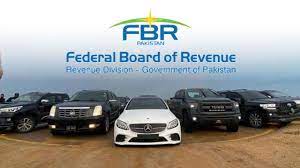
ISLAMABAD: In a comprehensive move to champion clean energy transportation and reduce environmental pollution, the Federal Board of Revenue (FBR) has issued official notifications detailing the revised customs duty structures on the import of both Electric Vehicles (EVs) and Hybrid Electric Vehicles (HEVs) for the fiscal year 2025–26.
These significant policy adjustments are aligned with Pakistan’s Electric Vehicle Policy 2020 and the Auto Industry Development and Export Policy (AIDEP) 2021–26, signaling a strong commitment to fostering a sustainable and locally driven automotive industry.

The Engineering Development Board (EDB) will play a pivotal role in overseeing compliance, certification, and quota determination for these concessional imports, ensuring that incentives genuinely support local assembly and manufacturing initiatives.
Concessional duty rates for electric vehicles (EVs)
The FBR has outlined attractive concessional duty rates across a wide spectrum of electric vehicles to encourage their widespread adoption and local production:
Electric Auto Rickshaws (PCT 8703.8030): These will be subject to 50% of the prevailing customs tariff. This concession is valid for five years from July 1, 2020, and applies to a maximum of 200 units of the same variant for local assembly or manufacturing within Pakistan.
Electric Motorcycles (PCT 8711.6040) and 3-Wheeler Electric Loaders (PCT 8711.6060): These crucial segments for urban and last-mile mobility are also covered under the same 50% concessional duty structure, supporting the expansion of two- and three-wheeler electric transport.
Electric Buses (PCT 8702.4090), Electric Trucks (PCT 8704.6030), and Electric Prime Movers (PCT 8701.2490): For larger transport and freight segments, a highly generous flat customs duty rate of just 1% has been assigned, with no additional conditions. This aims to significantly encourage the commercial adoption of clean energy vehicles in public and goods transport sectors.
Electric 4-Wheelers (Value up to USD 50,000): These vehicles will be taxed at a 25% duty. However, companies assembling or manufacturing the same variant locally can import up to 100 CBU (completely built-up) units at 50% of this rate until June 30, 2026, subject to EDB certification.
Concessional Duty Structure for Hybrid Electric Vehicles (HEVs)
Parallel to the EV incentives, the FBR has also updated the customs duty rates for Hybrid Electric Vehicles (HEVs), focusing on supporting manufacturers keen on local assembly:
1% Customs Duty for CBU HEVs: A highly concessional customs duty rate of just 1% will be applicable on the import of HEV units in Completely Built-Up (CBU) condition. This applies to HEV models falling under specific Pakistan Customs Tariff (PCT) Codes (8702.2090, 8702.3090, 8704.4100, 8704.4200, 8704.5100, and 8704.5200).
Eligibility for Manufacturers: This reduced duty is exclusively available to manufacturers importing the same variant of the HEV for the purpose of local assembly or manufacturing. Eligibility will be strictly determined by the issuance of a manufacturing certificate and quota by the Engineering Development Board (EDB).
Driving Local Production and Environmental Sustainability
These updated duty frameworks reflect Pakistan’s strong policy direction towards fostering an ecosystem that supports local production and long-term investment in electric and hybrid vehicles. By facilitating low duty rates on both EV and HEV imports, especially for manufacturers preparing to assemble such models locally, the government aims to:
Reduce Dependency on Fossil Fuels: Promote a shift away from conventional fuel sources.
Cut Carbon Emissions: Contribute to a cleaner environment and combat climate change.
Attract Investment: Encourage global players and local investors to establish and expand manufacturing facilities in Pakistan.
Make Eco-Friendly Vehicles Affordable: Ultimately, accelerate the local production of green vehicles, making them more accessible and affordable for Pakistani consumers.
Industry insiders view these consistent and favorable import terms as crucial steps that could significantly accelerate the domestic production of both EVs and HEVs, paving the way for a greener and more sustainable automotive landscape in Pakistan.